Trusted design professionals since 1995
What’s Covered on This Page
- Section 1
- Custom Part & Accessory Fabrication Solves One-Off Needs in Calgary
- Rapid Prototyping Turns Ideas Into Physical Parts Fast
- End-Use Production Parts Printing Covers Repeat Runs
- Custom 3D Design Builds the Concept Before Printing Starts
- Design Optimization for Print Fixes Files Before Fabrication
- Functional Prototype Testing & Validation Confirms Real-World Performance
- Design Validation & Engineering Stamping Confirms a Design Is Ready
- Where is Masters 3D located, and is parking easy downtown?
- What happens when I bring in a project for the first time?
- How do I know if I need custom fabrication or production printing?
- Should I start with custom 3D design or design optimization?
- Why do so many Calgary oil and gas companies use 3D printing for parts?
- When should I use prototyping instead of jumping straight to production?
Section 1
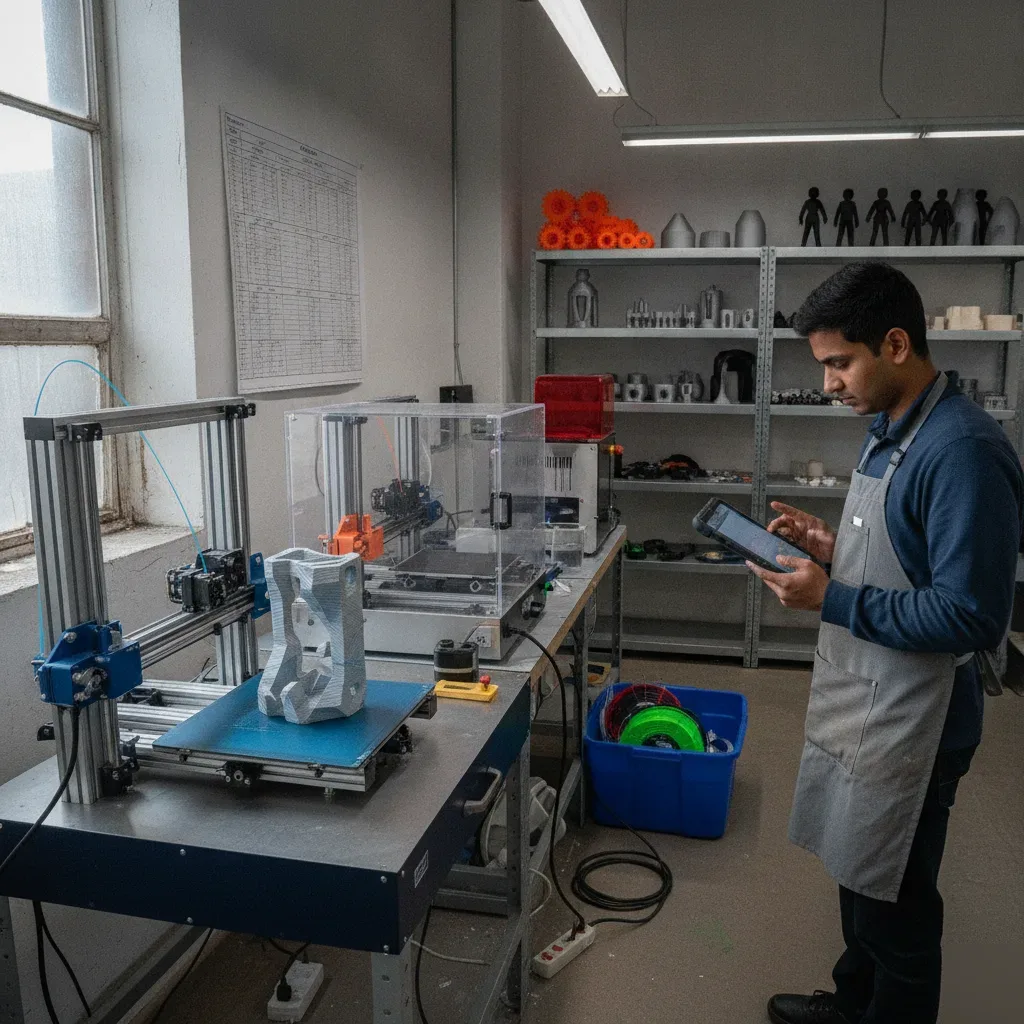
In Calgary, energy, industrial, and infrastructure firms need parts built to hold up under real conditions, not just parts that look right on a screen. Masters 3D provides 3D printing service from our downtown Calgary location on 6th Ave SW, serving the businesses that keep this city’s oil and gas, industrial, and infrastructure sectors running. This page covers the full range of what we do – fabrication, custom design, prototyping, design optimization, functional testing, engineering validation, and production parts printing – so you can find the service that fits your project. Below, you’ll get a short breakdown of each one, how they connect from concept to finished part, and where to go for full detail. Masters 3D is a Calgary-based design firm with a team of licensed engineers and project history in oil and gas, industrial, and structural work dating back to at least 2020. We pair that engineering background with a design-to-print workflow built for parts that need to perform, not just parts that need to exist.
Contact Masters 3D to talk through a project and find the right starting service.
Custom Part & Accessory Fabrication Solves One-Off Needs in Calgary
Something breaks. A component wears out faster than expected. A facility needs one custom bracket that doesn’t exist in any catalog. Custom part and accessory fabrication is built for exactly this – a single part, made to fit, without setting up for a full production run.
We take a broken sample, a rough sketch, or a measurement set and turn it into a fabricated part your equipment can actually use. This works well for maintenance jobs, one-off repairs, and accessories that support a bigger piece of equipment already in service. Honestly, this is the step most people underestimate – they assume a replacement part has to come from the original manufacturer, when a fabricated equivalent can often solve the problem faster.
Fabrication covers single or small-batch custom parts. End-use production printing, covered further down, is different – that service handles repeat runs of the same finished part, not a one-time fix. If you need exactly one part made right, this is the service to start with.
Rapid Prototyping Turns Ideas Into Physical Parts Fast
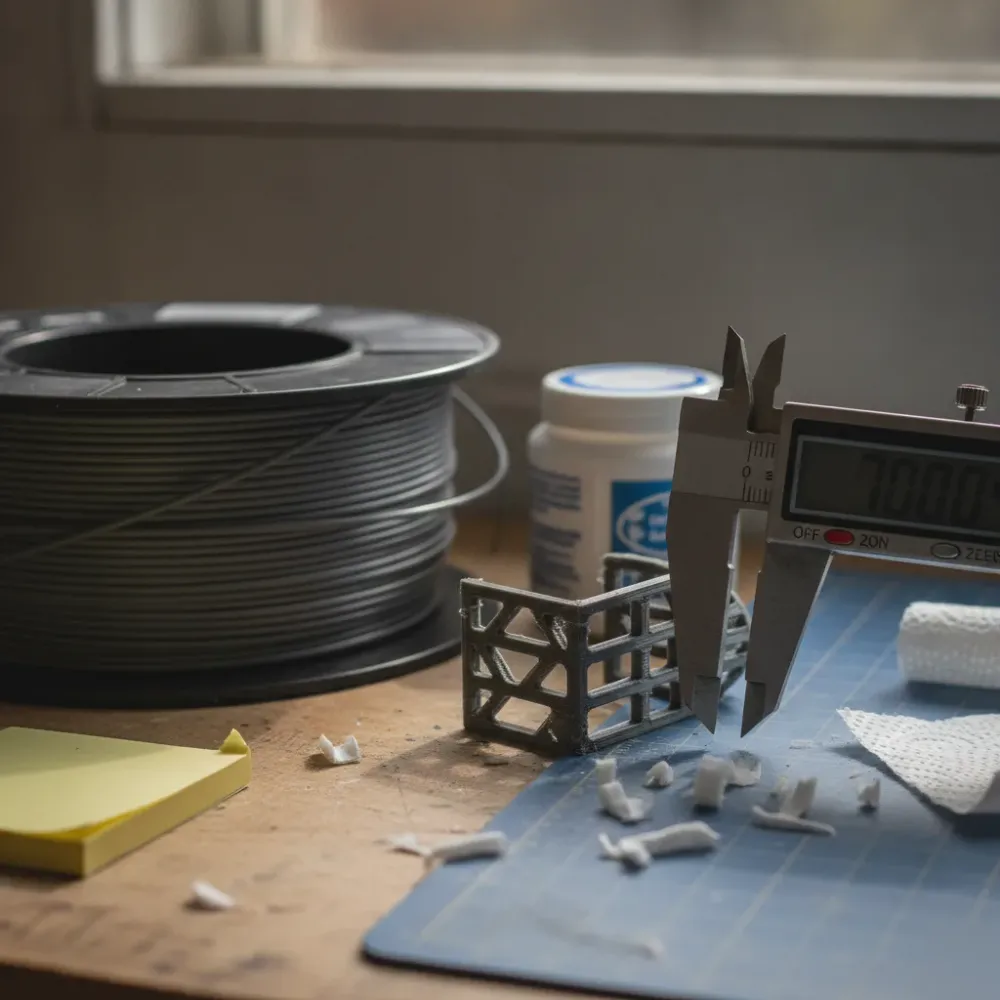
Rapid prototyping takes a design file and turns it into something you can hold in your hands. Engineers and product teams use it to check form, fit, and size before committing to a final design or a production order.
This step catches problems early. A dimension that looked fine on screen can turn out too tight, too thin, or oddly shaped once it’s physical. Deliverable file formats we work with include STL, STEP, and IGES, depending on what stage the design is at and what the next step requires. Getting a prototype into your hands quickly cuts down on rework later, when changes cost more time and material.
Rapid prototyping builds the physical iteration. Functional prototype testing and validation, covered below, is a separate step – it checks whether that iteration actually performs under real conditions, not just whether it looks and fits correctly. Prototyping answers “is it built right.” Testing answers “does it work.”
End-Use Production Parts Printing Covers Repeat Runs
Once a design is locked in, you don’t want to reinvent it every time you need another one. End-use production parts printing covers repeatable runs of a finished part, meant to go into service and stay there, not get tested and set aside.
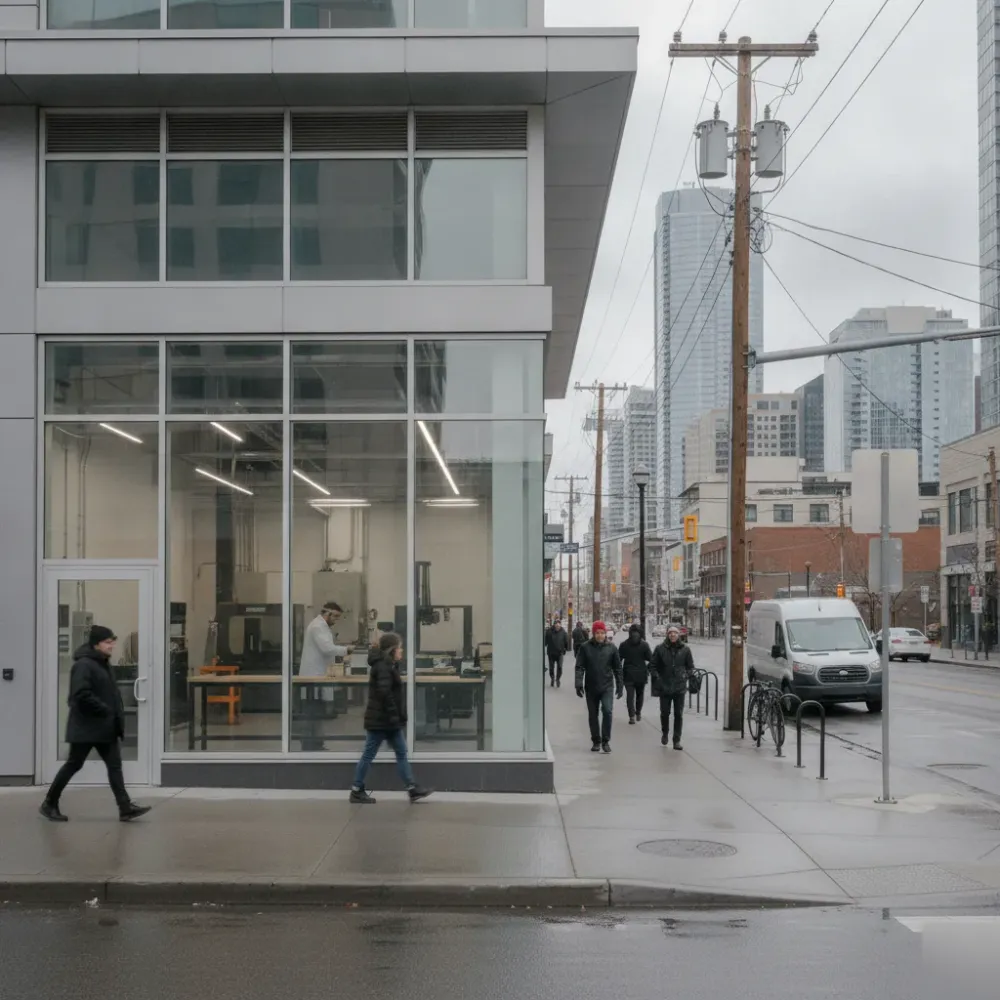
Calgary’s concentration of energy and infrastructure firms creates steady demand for this kind of work. Equipment in these sectors often stays in service for years, and it needs a consistent supply of replacement parts that match the original specification every time. This service is built for that pattern – print, verify, repeat.
Unlike custom fabrication, which handles one-off or custom parts, production printing focuses on repeatable batches of a design that’s already finished. A few things define this service:
- Consistent dimensional accuracy across every unit in the run
- A locked design file, so there’s no re-engineering between batches
- QA and inspection built into the workflow, not added afterward
- Parts intended for ongoing service life, not short-term testing
If your operation depends on steady replacement supply for equipment already in the field, this is the service built for that need.
End-Use Production Parts Printing in Calgary
See the full End-Use Production Parts Printing page for project details and next steps.
Custom 3D Design Builds the Concept Before Printing Starts
What happens when there’s no file to print from at all? That’s where custom 3D design comes in. You might have a sketch, a physical sample, or just an idea in your head – our licensed team builds the digital model from that starting point.
This is the upstream step that feeds almost everything else on this page. Without a digital model, there’s nothing to prototype, nothing to fabricate, and nothing to test. We build the geometry from scratch, working toward deliverable formats like STEP, IGES, or STL depending on what the project needs next.
Custom 3D design creates the part’s shape and concept from nothing. Design optimization for print, covered next, is different – it takes an existing design and adjusts it so it prints correctly. One builds the idea. The other fixes a file that’s already been built. If you’re starting from zero, this is where your project begins.
Design Optimization for Print Fixes Files Before Fabrication
You’ve got a design file already. Maybe it came from another engineer, another shop, or an older project. But it keeps failing during a print run, or it prints with warping, weak spots, or wasted support material. That’s a sign the file needs optimization before it goes anywhere near a printer.
We adjust wall thickness, part orientation, and support structures so the file prints cleanly the first time. This step matters more than people expect – a design can be geometrically correct and still print poorly if it wasn’t set up with the printing process in mind.
Optimization doesn’t create new geometry. It corrects an existing design so it prints successfully, unlike custom 3D design, which builds the concept itself from a blank file. If your project keeps hitting print failures or you’re burning material on failed runs, this is the fix.
Watch Our Video
See How We Handle 3D printing service in
Masters-3D
Functional Prototype Testing & Validation Confirms Real-World Performance
A prototype that looks right isn’t the same as a prototype that works right. Functional prototype testing and validation checks a physical part against real operating conditions – load, fit, stress – before anyone clears it for production.
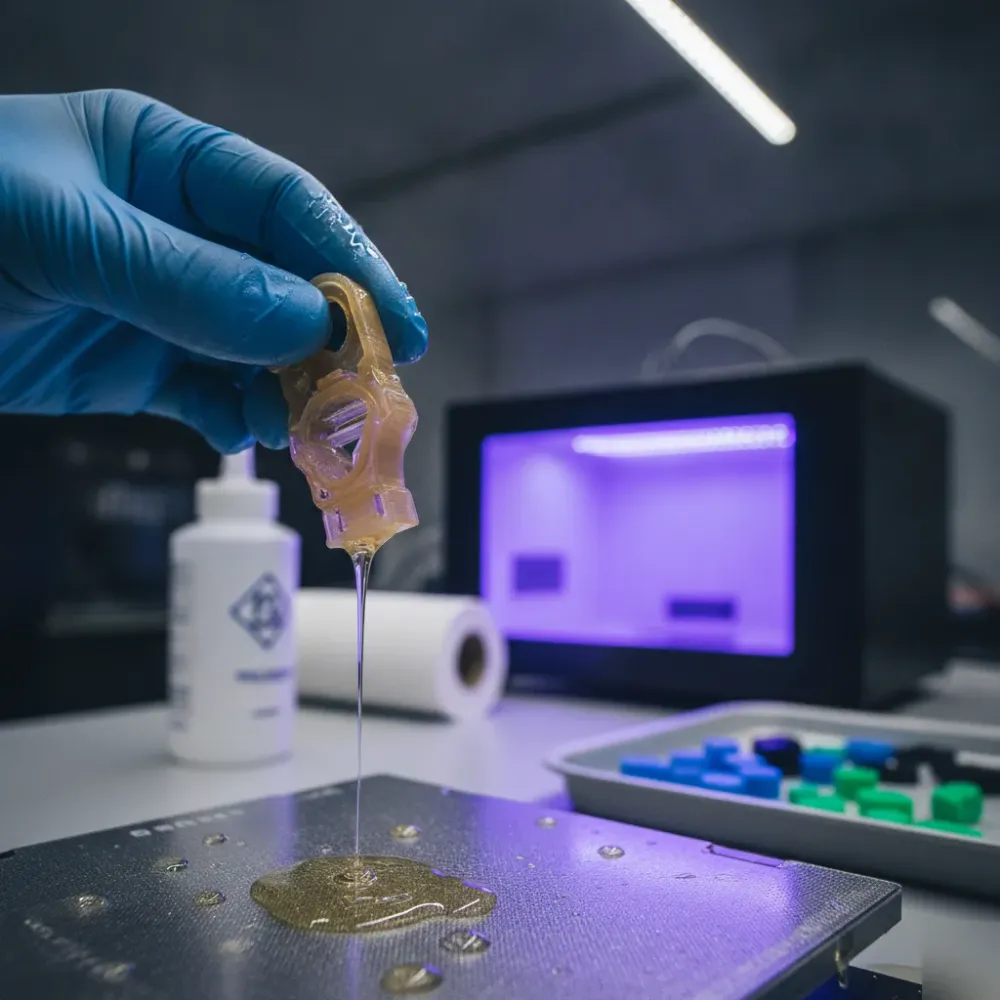
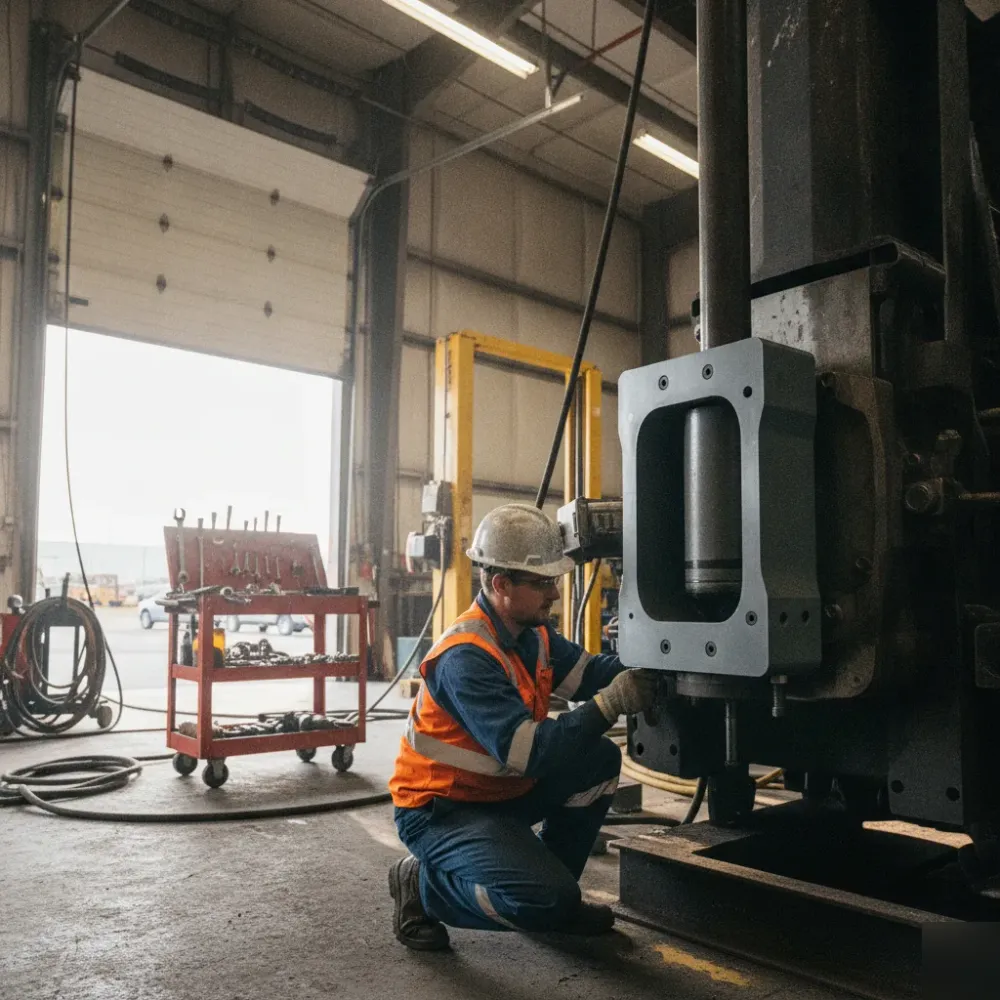
This step matters most for parts headed into industrial or structural service. Calgary’s energy and industrial clients often need proof a part holds up under actual operating conditions before it goes into the field, not just proof it matches the drawing. Skipping this step is how a design that looked fine on the bench ends up failing once it’s under real load.
Rapid prototyping builds the physical part. This service evaluates whether that part actually performs – a separate step that comes after the part exists and before it goes into production. If your team already has a prototype in hand and needs proof before scaling up, this is the next move.
Design Validation & Engineering Stamping Confirms a Design Is Ready
Some parts need more than a passing test – they need formal engineering sign-off before fabrication moves forward. Design validation and engineering stamping is that sign-off, applied specifically within the print workflow, before a design goes into structural or industrial use.
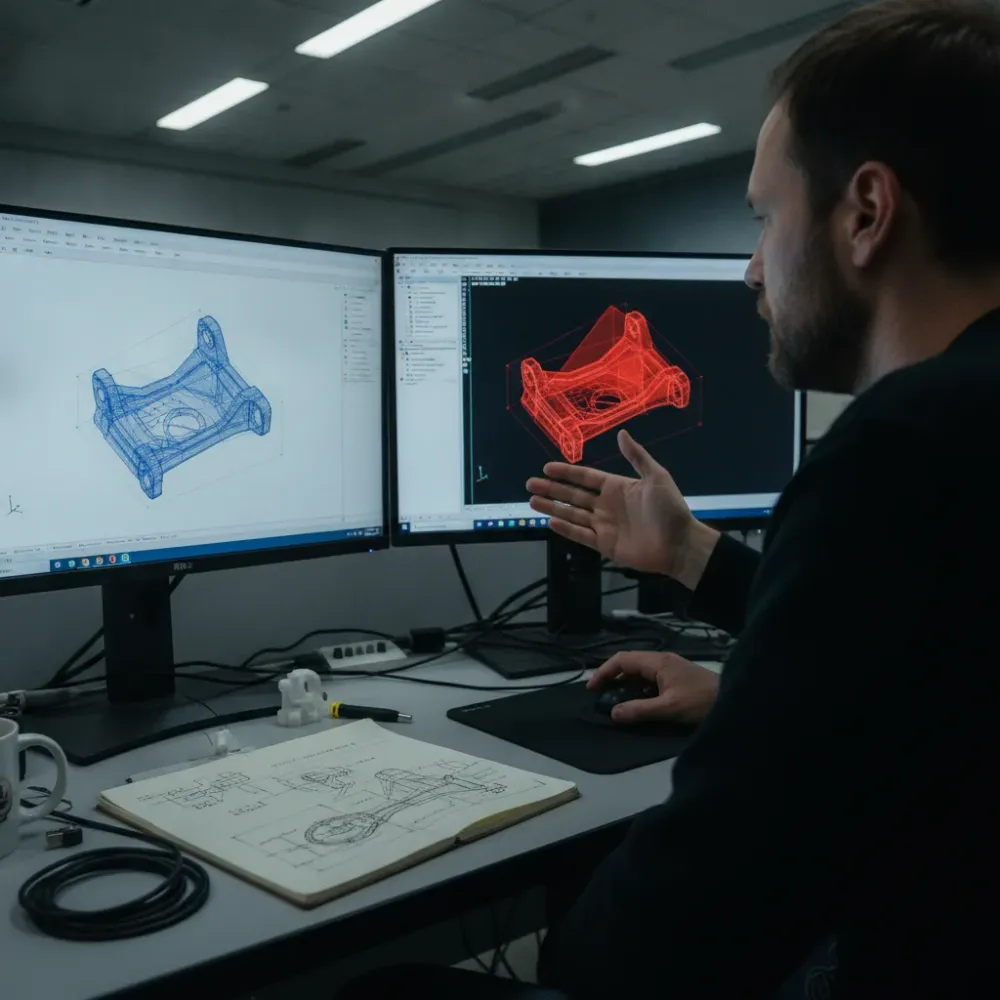
Our licensed engineers review the design against requirements and confirm it’s ready before it gets fabricated. This step covers sign-off within the 3D printing workflow only. Broader engineering and drafting work – full drawing packages, P&IDs, as-builts, or standalone structural design – falls under Masters 3D’s separate engineering and drafting services, not this page.
This service applies engineering review specifically to designs headed for 3D printing, distinct from the wider engineering or drafting work we also provide. If your part is headed into regulated or higher-stakes service and needs a stamped, validated design before it’s built, this is the step that gets you there.
Design Validation & Engineering Stamping in Calgary
Contact Masters 3D today to start a 3D printing project in Calgary. We offer a Free Estimate – email [email protected] or call 587-323-3900.
Frequently Asked Questions
Common questions about 3D printing service
Where is Masters 3D located, and is parking easy downtown?
We’re located on 6th Ave SW in downtown Calgary. Street parking and nearby lots are available if you’re dropping off a broken part or picking up a finished one. If you’re not sure about access, call ahead and we’ll walk you through the easiest route to our door.
What happens when I bring in a project for the first time?
We start by looking at what you have, whether that’s a broken part, a sketch, or just an idea. Our licensed engineers ask questions about how the part will be used and what conditions it needs to survive. From there, we point you to the right service instead of guessing.
How do I know if I need custom fabrication or production printing?
Custom fabrication is for one part or a small batch, like a repair or a bracket that doesn’t exist anywhere else. Production printing is for repeat runs of a finished design that’s already locked in. If you need one part now, start with fabrication. If you need the same part again and again, production printing fits better.
Should I start with custom 3D design or design optimization?
Start with custom 3D design if you have no file yet, just a sketch or an idea. Choose design optimization if you already have a file that keeps failing to print correctly, like warping or weak spots. One builds a part from nothing. The other fixes a design that already exists.
Why do so many Calgary oil and gas companies use 3D printing for parts?
Calgary’s energy and industrial sector needs equipment that stays in service for years without downtime. That means replacement parts have to match the original specification every time. Fabrication and production printing solve this by giving you a fast, repeatable source for parts, instead of waiting on a manufacturer that may no longer stock them.
When should I use prototyping instead of jumping straight to production?
Use prototyping when you need to check form, fit, and size before committing to a final design. It catches problems early, before a full production run makes changes expensive. Once the design is confirmed, production printing takes over for the repeatable runs your equipment needs.
Recent Comments