
Trusted design professionals since 1995
What’s Covered on This Page
- What an Engineering Stamp Certifies
- Deciding If Your Design Needs a Stamp Before Fabrication
- When Stamping Isn’t the Right Step Yet
- Preparing Scan, CAD, or As-Built Data for Review
- Inside the Design Review and Stamping Process in Calgary
- What does an engineering stamp cover?
- How do I know if my drawing needs to be stamped?
- What files do I need to send over for a stamped drawing?
- What happens if I only have old paper drawings, no digital file?
- Can a stamp be applied to a reverse-engineered part from a 3D scan?
- Is it too early to get my design stamped if it’s still in concept stage?
What an Engineering Stamp Certifies
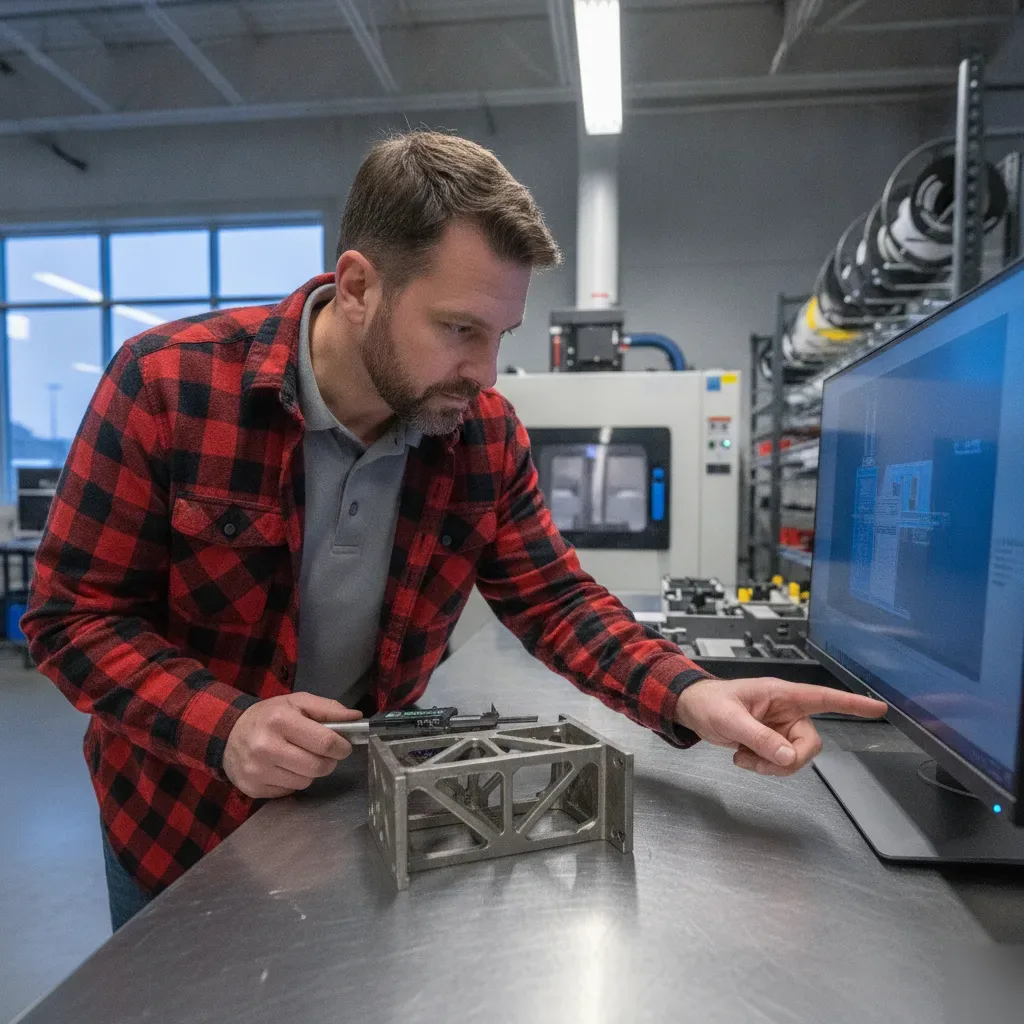
A stamp isn’t a formality tacked onto the end of a project. It’s a licensed engineer putting their name, and their legal accountability, behind a design. In Alberta, only engineers registered with the province’s professional engineering body can apply that stamp. So when a drawing goes out stamped, someone with the training and the license has already verified it holds up under real loads and real conditions.
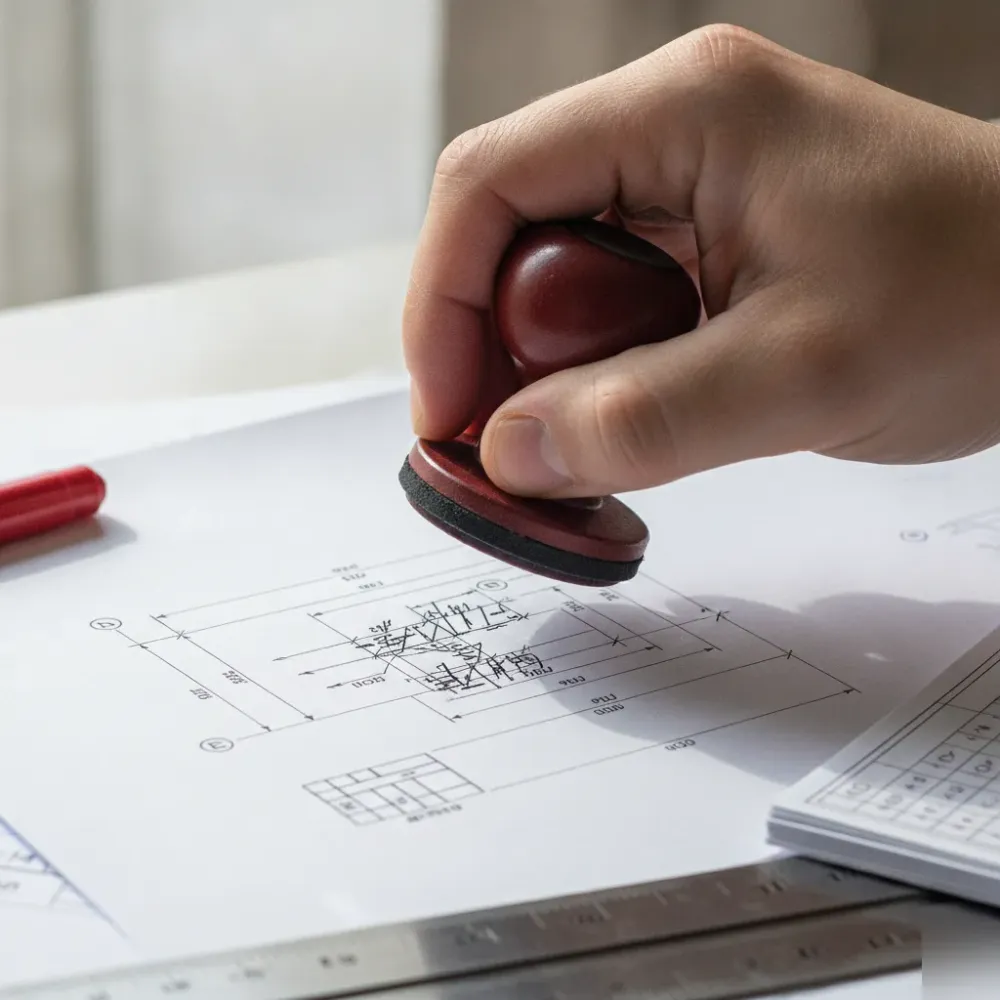
What does that review actually cover? It varies by deliverable, but a few things get checked every single time.
- Structural load paths and material specifications against relevant design codes
- Fabrication tolerances for piping, structural steel, and pressure-retaining components
- Dimensional accuracy against the source data, whether that’s a point cloud, CAD model, or as-built scan
- Compliance for tanks, vessels, and skid packages headed for permit review
- Consistency between the drawing package and the physical site or as-built conditions
We produce stamped drawings from 3D scans, CAD models, or reverse-engineered geometry, and the stamp only goes on once our licensed engineers have reviewed the file end to end. That review is what separates a stamped drawing from a rendering. A pump skid model without a stamp is just a picture. A stamped one is a document a fabricator or regulator can actually act on.
Deciding If Your Design Needs a Stamp Before Fabrication
Not every drawing that comes off a CAD workstation needs a stamp. A concept sketch for internal review doesn’t. A design that supports a load, holds pressure, or gets submitted for a permit does.
We hear this question constantly from procurement leads in Calgary and across Alberta, and the deciding factor is simple: will this drawing be used to build, inspect, or approve something in the field? If the answer is yes, it needs a licensed engineer’s review and sign-off.
- The design supports structural load, pressure containment, or mechanical stress (tanks, skids, vessels, structural steel)
- The drawing will be submitted to a regulatory body, municipality, or client for permit or approval
- Fabrication or field crews will build directly from the drawing set
- The project involves modifications to existing structures or piping with unknown as-built conditions
- Insurance, liability, or contractual terms require a professional engineer’s record of review
If none of those apply, we’ll tell you directly, you may not need a stamped package at this stage. A rough layout for internal budgeting, an early-phase concept model, a scan used only for measurement: none of these require sign-off.
Where it gets less obvious is reverse engineering work. A point cloud converted to CAD for a replacement part can look finished, but geometry alone isn’t validation. Our licensed engineers check dimensional tolerance, material behavior, and load path before that model earns a stamp.
So ask yourself one question before you call: is this drawing going to build something, or just describe something? That answer tells us exactly which service you need.
When Stamping Isn’t the Right Step Yet
Not every design needs a stamp yet. If your project is still a rough concept, a napkin sketch or a first-pass CAD model you’re using to size up options internally, stamping is premature. A stamped drawing carries legal and professional weight. It tells a fabricator, an inspector, or a regulator that a licensed engineer has reviewed the design and stands behind it for construction or field use.
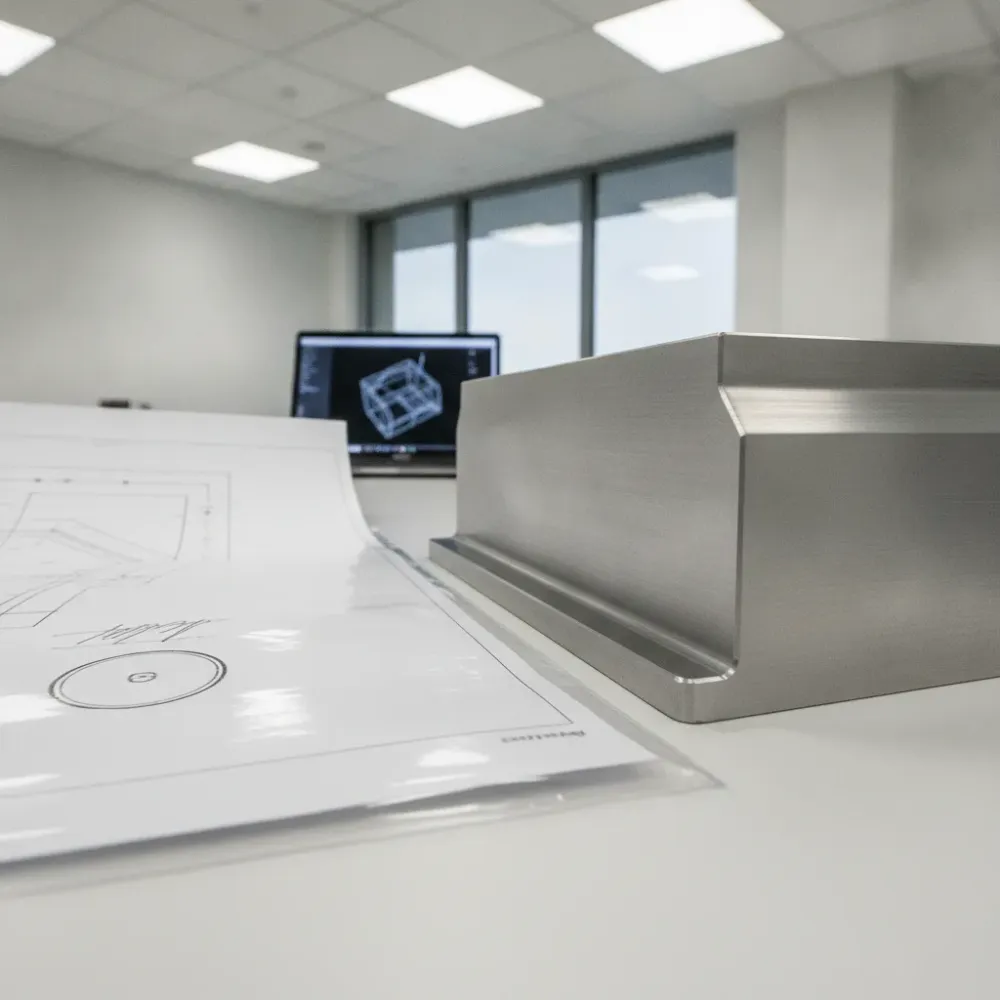
We see this often with pump skid and gen set layouts. A team wants a quick 3D model to compare vendor footprints before committing to a design direction. That’s a design consulting exercise, not a stamped deliverable. Stamping that early locks in a design that hasn’t been finalized, and any revision after the stamp means a new review cycle.
- The design is still in concept or comparison stage, not yet fabrication-ready
- No structural, pressure, or life-safety component is involved
- The drawing is for internal budgeting or planning only, not for permit or construction
- You need a 3D model or point cloud reference, not a certified engineering record
If any of those describe where you’re at, hold off. Get the design settled first, run your internal reviews, then bring it forward for stamping once it’s the version you actually intend to build. Stamping a moving target wastes review time, and your money.
Need help with Design Validation & Engineering Stamping?
Call now. Masters-3D is ready to help.
Preparing Scan, CAD, or As-Built Data for Review
Before our engineers can stamp a drawing, we need clean, verifiable source data. That starts with whatever you already have on hand, not a stack of new paperwork.
We accept point cloud data in E57 or RCP format from field scans, along with CAD files in STEP, IGES, STL, or DWG. If you’re validating an existing skid, tank, or compressor package, prior fabrication drawings and any field markups help our team confirm as-built condition against the original design intent.
Older lease sites in Calgary’s Foothills Industrial area often come with paper-only drawings from decades back, no digital record at all. In those cases, we recommend a fresh 3D laser scan first, then build the CAD model from that point cloud before engineering review begins.
Our QA workflow cross-checks incoming scan or CAD data against stated design tolerances before it reaches a licensed engineer for sign-off. Anything outside acceptable tolerance gets flagged and returned with notes, not silently corrected. That step alone saves rework downstream on P&IDs, structural steel drawings, and pipeline alignment sheets.
- Point cloud data (E57 or RCP) from a recent 3D scan
- Native CAD files (STEP, IGES, STL, or DWG)
- Previous IFC or as-built drawings, if they exist
- Field notes, site photos, and survey control points
- Equipment tags or nameplate data for tanks, vessels, or skids
Send what you have. If a file is missing or a format won’t open on our end, we’ll tell you before the review starts, not after.
Inside the Design Review and Stamping Process in Calgary
So what does the process look like once a design lands on our desk? It starts with a technical review, not a rubber stamp. Our licensed engineers check the geometry, the loads, the tolerances, and the fit against what the site conditions allow.

For a tank or pump skid project, that review often starts from a point cloud we captured on site, brought into CAD as a STEP or IGES file for modeling. We compare the as-built scan against the proposed design before anyone signs off on anything.
- Intake and site data review, including any point cloud, E57, or as-built drawing set already on file
- Engineering analysis of loads, clearances, and code compliance for the specific structure or package
- Markup and revision cycle with the design or drafting team to resolve conflicts before fabrication
- Formal stamping and sign-off by a licensed engineer on the final drawing set
- Delivery in the format your fabricator or regulator needs, whether that’s DWG, STEP, or PDF
That revision cycle matters more than people expect. More often than not, the first design pass has a clash somewhere, a pipe run that hits a structural member, a skid footprint that’s a few centimeters off the pad. Catching that on paper costs a markup. Catching it in the field costs a shutdown.
We see this constantly on lease sites and battery facilities across the Calgary region, where retrofits get layered onto older infrastructure with as-builts that no longer match reality.
Once the stamp goes on, the drawing set is ready for fabrication, procurement, or regulatory submission. That’s the whole point of the exercise.
Frequently Asked Questions
Common questions about Design Validation & Engineering Stamping
What does an engineering stamp cover?
An engineering stamp confirms a licensed engineer reviewed your design and it meets structural and mechanical standards. It checks load paths, material specs, and fabrication tolerances against your source data. In Alberta, only engineers registered with the provincial body can apply this stamp. That review is what turns a CAD model or scan into a document a fabricator or regulator can act on, not just a picture of a part.
How do I know if my drawing needs to be stamped?
Your drawing needs a stamp if it supports structural load, holds pressure, or goes to a regulator for permit approval. Ask yourself: will this build something, or just describe something? Concept sketches and internal budgeting models usually don’t need sign-off. But tanks, skids, structural steel, and any modification to existing piping with unknown as-built conditions almost always do. If you’re unsure, we’ll tell you straight whether you’re ready for this step.
What files do I need to send over for a stamped drawing?
You can send point cloud data in E57 or RCP format, or CAD files in STEP, IGES, STL, or DWG. If you’re validating an existing skid or tank, prior fabrication drawings and field markups help our engineers confirm as-built conditions. Our QA team checks incoming data against tolerance requirements before it reaches a licensed engineer. Anything outside range gets flagged and sent back with notes, not quietly fixed.
What happens if I only have old paper drawings, no digital file?
If your only record is a paper drawing, we recommend a fresh 3D laser scan before engineering review starts. This comes up often on older lease sites in Calgary’s Foothills Industrial area, where equipment predates any digital drawing set. We build a CAD model from that scan data first, then our engineers check it against design intent before anything gets stamped. Starting from a scan avoids guesswork on decades-old as-built conditions.
Can a stamp be applied to a reverse-engineered part from a 3D scan?
Yes, but the geometry alone isn’t enough for sign-off. A point cloud converted to CAD can look finished, yet our engineers still verify dimensional tolerance, material behavior, and load path before it earns a stamp. This matters most on replacement parts for existing equipment, where the original design intent isn’t documented. Skipping this check risks a part that fits visually but fails once it’s back under real load.
Is it too early to get my design stamped if it’s still in concept stage?
Yes, stamping a concept model is premature if no structural or pressure component is finalized yet. We see this with pump skid or gen set layouts, where teams want a quick 3D model to compare vendor footprints before committing. That’s a design comparison exercise, not a stamped deliverable. Any revision after a stamp means a new full review cycle. Settle your design direction first, then bring it forward for engineering sign-off.
Recent Comments