Trusted design professionals since 1995
What’s Covered on This Page
- Diagnosing When a Tank or Vessel Needs a New 3D Model
- From Laser Scan to Fabrication-Ready CAD: The Modeling Workflow
- Engineering Sign-Off: When APEGA Review and CSA B51 Apply
- Documentation-Only Models vs. Fabrication-Ready Deliverables
- When You Don’t Need a New Vessel Model
- How long does an on-site tank or vessel scan take?
- What happens when your crew arrives to scan our tank?
- Why do tank foundations on Calgary lease sites shift over time?
- How do I know if my tank’s drawings are still accurate?
- Do I need an engineer-stamped model for my tank or vessel?
- What do I receive once the modeling work is done?
Diagnosing When a Tank or Vessel Needs a New 3D Model
Old drawings lie, not intentionally, but reliably. A tank installed back in the 1980s has almost certainly been re-piped, re-nozzled, or shimmed at some point since. We see this constantly on lease sites north and east of Calgary, where battery tanks get swapped or relocated and nobody circles back to update the original as-builts.
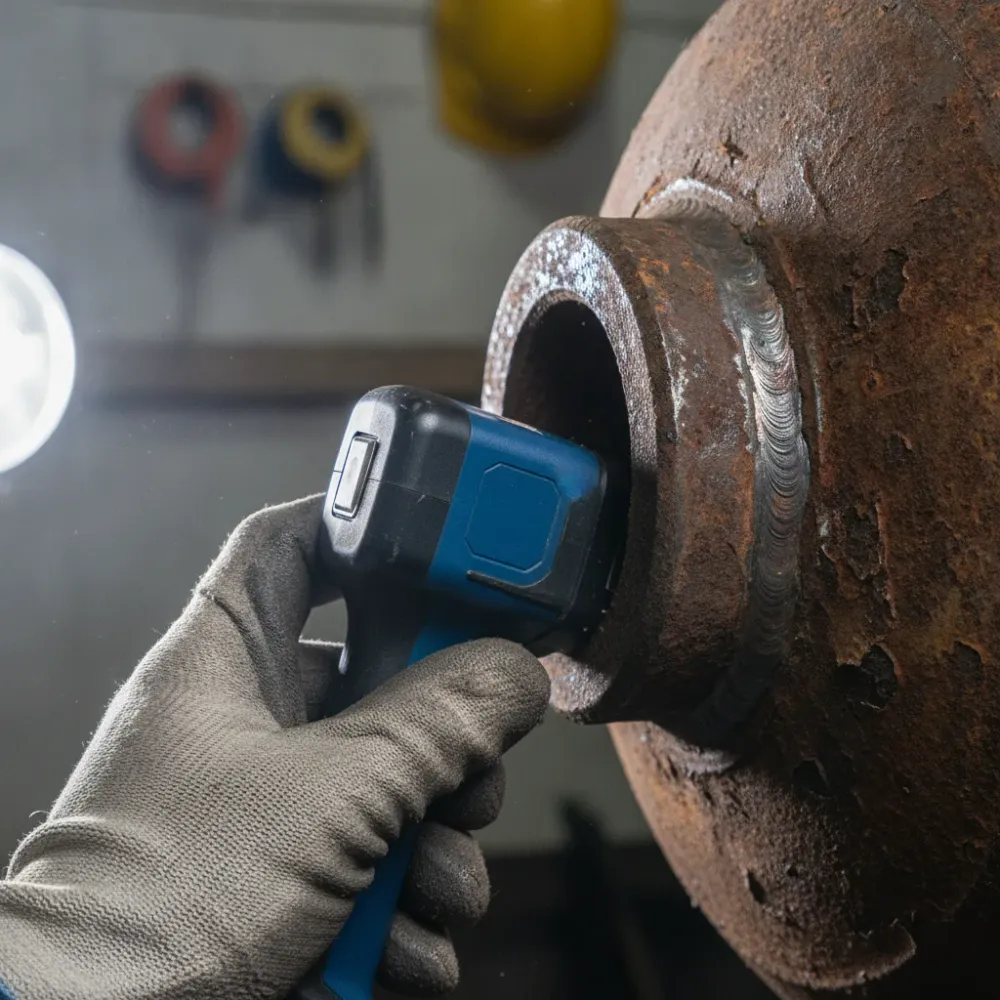
So how do you know if your drawings still hold up? Start with the nozzle schedule. If field crews added or moved a nozzle and it never made it onto the isometric, that drawing set can’t be trusted for a new skid tie-in or vessel modification.
- Tank has visible shell distortion, bulging, or settlement not reflected on record drawings
- Nozzle locations, orientations, or sizes differ from the original fabrication drawing
- Foundation or saddle positions have shifted, common on older lease sites with frost heave
- Insulation, cladding, or external piping was added after the tank was commissioned
- No CAD file exists at all, only a scanned paper drawing or a hand sketch
Here’s the part most people miss: a model built from outdated drawings is worse than having no model at all, because it hands you false confidence. Our licensed engineers treat every legacy drawing as a starting hypothesis, not a fact, until a scan proves it out.
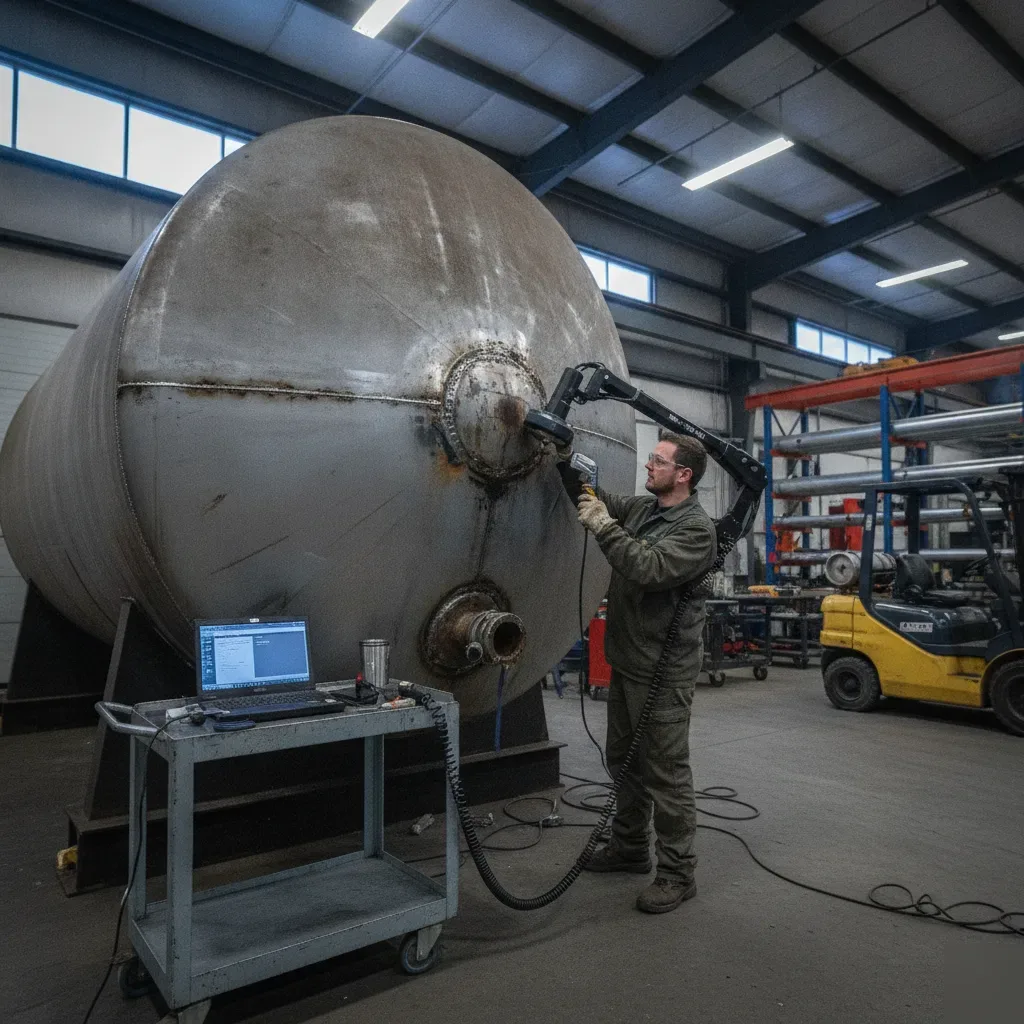
That confirmation comes from 3D laser scanning the tank and its surrounding piping, capturing point cloud data precise enough to catch shell deflection and nozzle offsets the old drawing never showed. We convert that point cloud into a validated CAD model, stamped by our engineering team, so procurement and fabrication crews work from geometry that matches the real vessel, not a 1998 file someone dug out of a drawer.
From Laser Scan to Fabrication-Ready CAD: The Modeling Workflow
Modeling a tank or vessel follows a disciplined sequence, one that turns a physical asset into a fabrication-ready digital file without a lot of back-and-forth. For plant managers across Calgary’s industrial corridors, from Foothills to the Nose Creek area, knowing this workflow ahead of time takes the guesswork out of scheduling and deliverables. The process is front-loaded with a short, focused site visit, then back-loaded with detailed office work, so shutdown windows get used efficiently instead of tied up for days on end.
- Site assessment: confirming access, safety requirements, and scan targets before boots hit the ground
- Laser scanning: capturing millions of data points across the tank or vessel and surrounding piping in a matter of hours
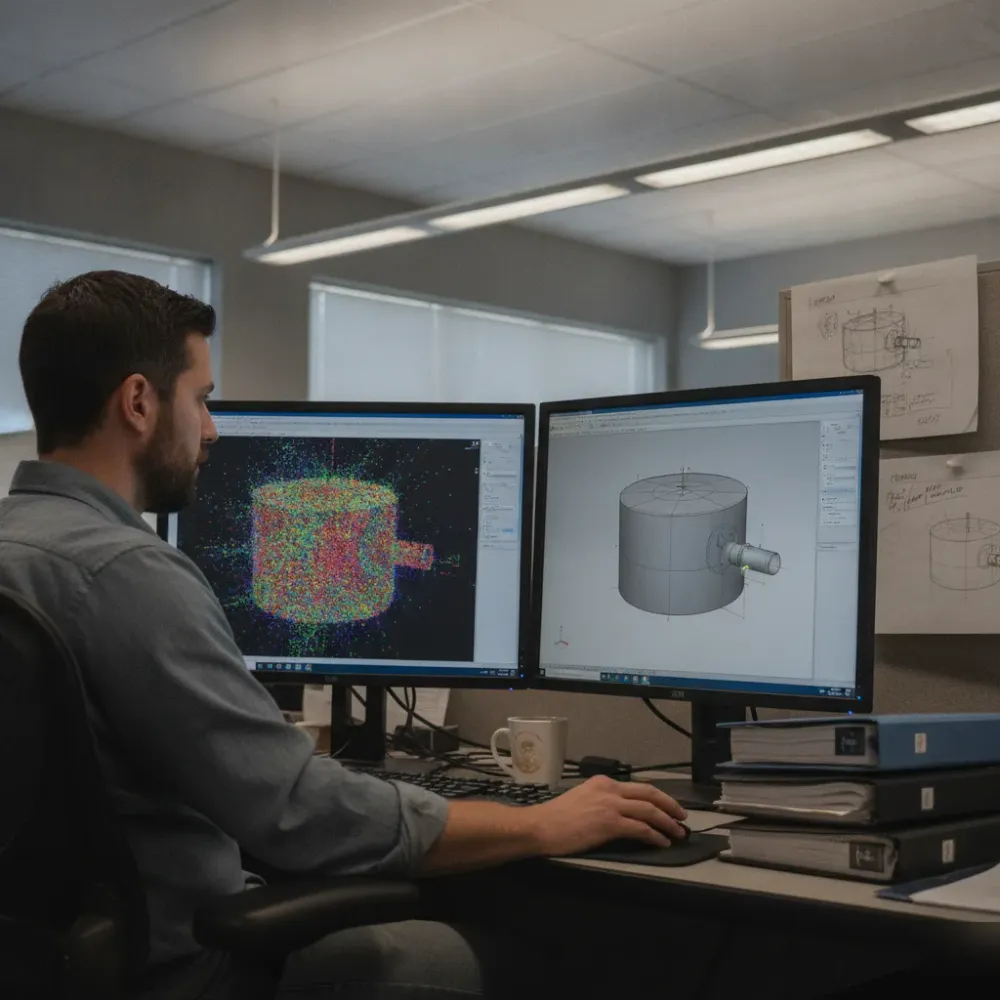
- Point cloud processing: cleaning and registering scan data into a unified, accurate digital representation
- CAD conversion: modeling shells, heads, nozzles, supports, and internals into fully dimensioned, editable CAD geometry
- Validation: cross-checking the model against the physical asset and existing drawings to confirm dimensional accuracy
- Delivery: handing off fabrication-ready files in the format your engineering or fabrication team requires
The on-site portion is kept deliberately short. A crew typically needs just a few hours, sometimes up to a full day, to scan a vessel, tank farm, or piping run, which keeps disruption to operations minimal and avoids stretching out equipment downtime. That distinction matters for Calgary facilities where turnaround windows are tightly scheduled and every hour of access carries a real cost.
Most of the work actually happens after the crew has already left site. Point cloud data gets processed and converted into solid CAD models, with tolerances checked against ASME and API standards where applicable. This is where raw scan data turns into usable engineering information, complete with wall thickness references, nozzle orientations, and the structural details needed for fabrication or repair planning.
It’s worth setting expectations early: what comes out of this workflow is a digital deliverable, not a physical product. Clients receive validated CAD files rather than a manufactured part, and those files feed directly into fabrication, retrofit, or engineering review, keeping the concept-through-completion pipeline moving without redundant re-measurement or rework.
Engineering Sign-Off: When APEGA Review and CSA B51 Apply
Not every tank model needs a stamp. A geometric reference model built from scan data can handle layout work and clash checks perfectly well on its own. But the moment that model starts feeding fabrication drawings, anchor bolt calculations, or nozzle loading checks, you cross into different territory.
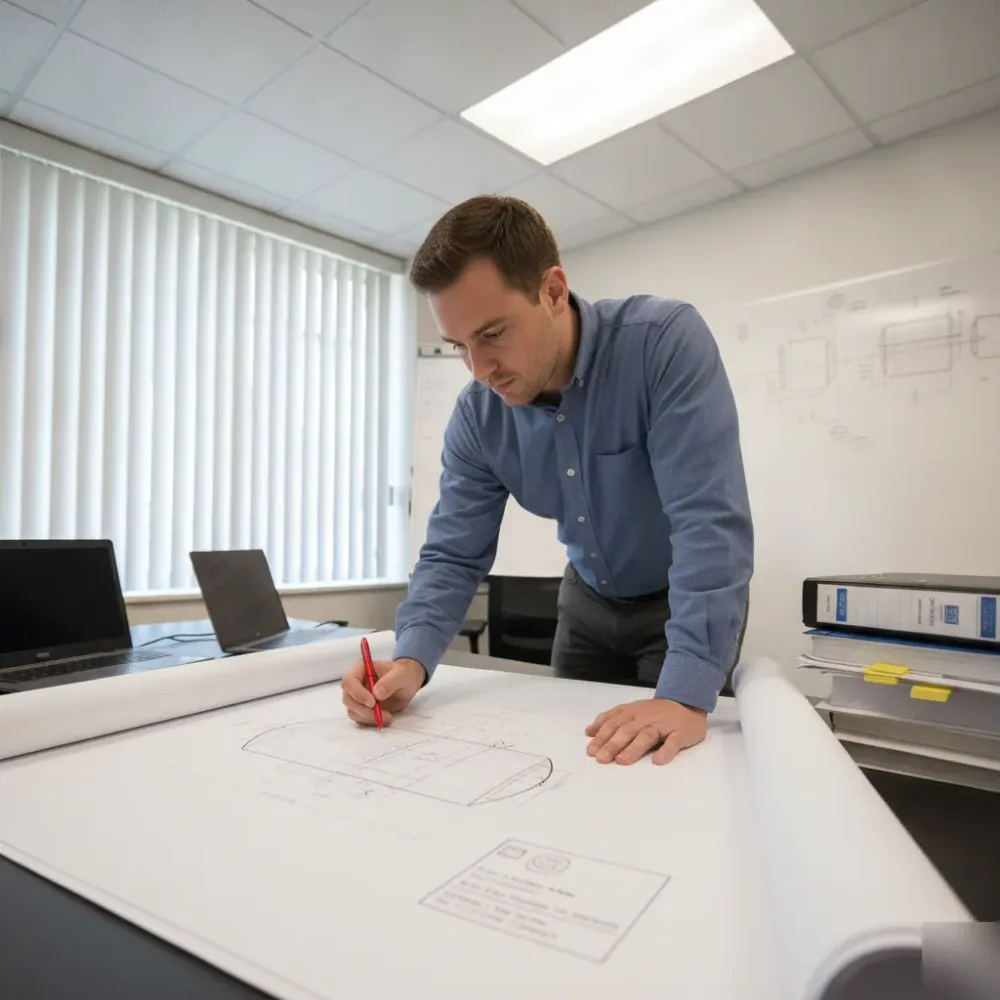
Pressure retaining vessels fall under CSA B51, the code governing boiler and pressure vessel design across Alberta. If your tank or vessel holds pressure, you’ll typically need design verification from a professional engineer registered with APEGA. Storage tanks without pressure retention aren’t automatically off the hook either – depending on the site, they may still require engineering review for wind loading, seismic anchoring, or foundation design.
- Pressure vessels and skid mounted equipment with process piping under CSA B51
- Tank foundations and anchor bolt patterns needing structural verification
- Nozzle loading and support calculations feeding fabrication drawings
- As built models used for regulatory or insurance documentation
This is where our licensed engineers come in. Every model that supports a stamped drawing goes through in-house engineering review – no third party handoff involved. Keeping the geometry, the calculations, and the sign off under one roof cuts out the back and forth that usually leaves a project waiting on someone else’s stamp.
We hear this question on almost every vessel project: does this need a stamp, or just a model? Honestly, the answer comes down to pressure class, jurisdiction, and end use – not how the tank looks.
Documentation-Only Models vs. Fabrication-Ready Deliverables
Not every tank or vessel modeling project calls for the same end product, and knowing the difference upfront saves Calgary facility owners from two costly mistakes: paying for more than the job requires, or finding out too late that the model can’t do what they needed it to. Broadly speaking, deliverables split into two tiers. Documentation-only models capture as-built conditions for the record. Fabrication-ready deliverables are engineered to support new construction, retrofits, or code-driven modification work.
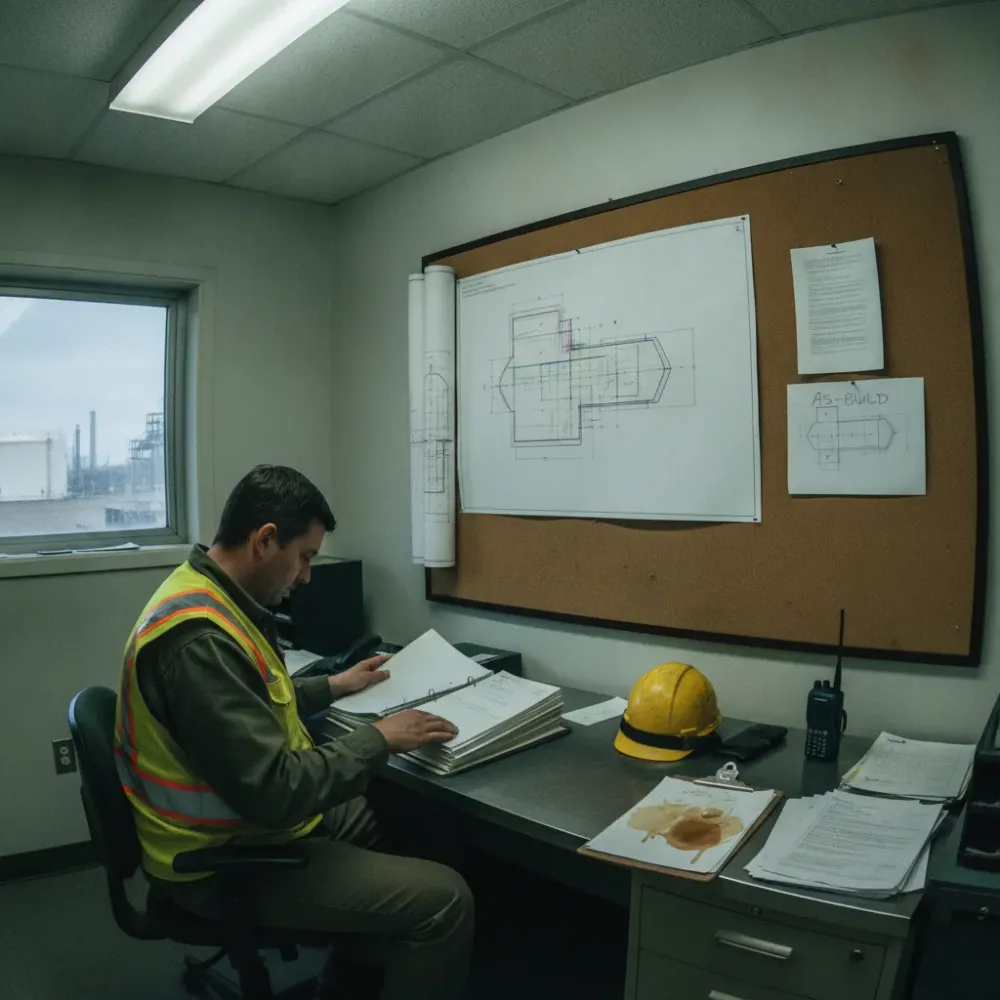
Documentation-only models answer one question: what’s actually there right now. They’re used for maintenance planning, insurance records, turnaround prep, or feeding into a broader facility digital twin. These models capture geometry, nozzle locations, structural supports, and clearances with enough accuracy for planning and coordination purposes, but they’re not stamped, not toleranced to fabrication standards, and were never meant to land on a shop floor as cutting instructions.
Fabrication-ready deliverables sit at the other end of the spectrum. These models carry the dimensional precision, weld detail, material callouts, and structural rigor a fabricator needs to build directly from them, and in Alberta that often means a professional engineer’s stamp before the work can be released for construction. Reaching this level demands tighter scan tolerances, more rigorous field verification, and close coordination with codes like ASME and CSA standards governing pressure vessels and storage tanks.
- Vessel complexity: nested piping, internal baffles, and multiple nozzle penetrations add modeling hours regardless of tier
- Site access: confined entry, elevated platforms, or live process areas change how capture is planned and executed
- Capture method: handheld scanning versus terrestrial laser scanning affects both speed and achievable tolerance
- Stamping requirements: engineer sign-off adds review cycles and liability considerations not present in documentation-only work
Pricing for either tier is never a flat rate. It’s scoped project by project around the four factors above rather than a per-vessel fee, which is exactly why two tanks that look nearly identical can end up with very different quotes depending on which plant they sit in.
The smarter move for a facility is working with one provider who can deliver both tiers, rather than pulling documentation from one vendor and fabrication-grade modeling from another. A single provider carries the full site history, scan data, and vessel context forward from project to project, which cuts out the rework, miscommunication, and duplicated site visits that tend to happen when the work gets split across separate firms.
Watch Our Video
See How We Handle Tank & Vessel Modeling in
Masters-3D
When You Don’t Need a New Vessel Model
Not every vessel or tank needs a fresh 3D scan, and a provider worth trusting will tell you that upfront. If your facility already has accurate, well-maintained as-built drawings, or a previous laser scan, and nothing on the vessel has physically changed since that data was captured, paying for a brand-new model usually just burns budget. Before you request a quote, ask the honest question: has anything on this vessel actually changed since the last accurate record was made?
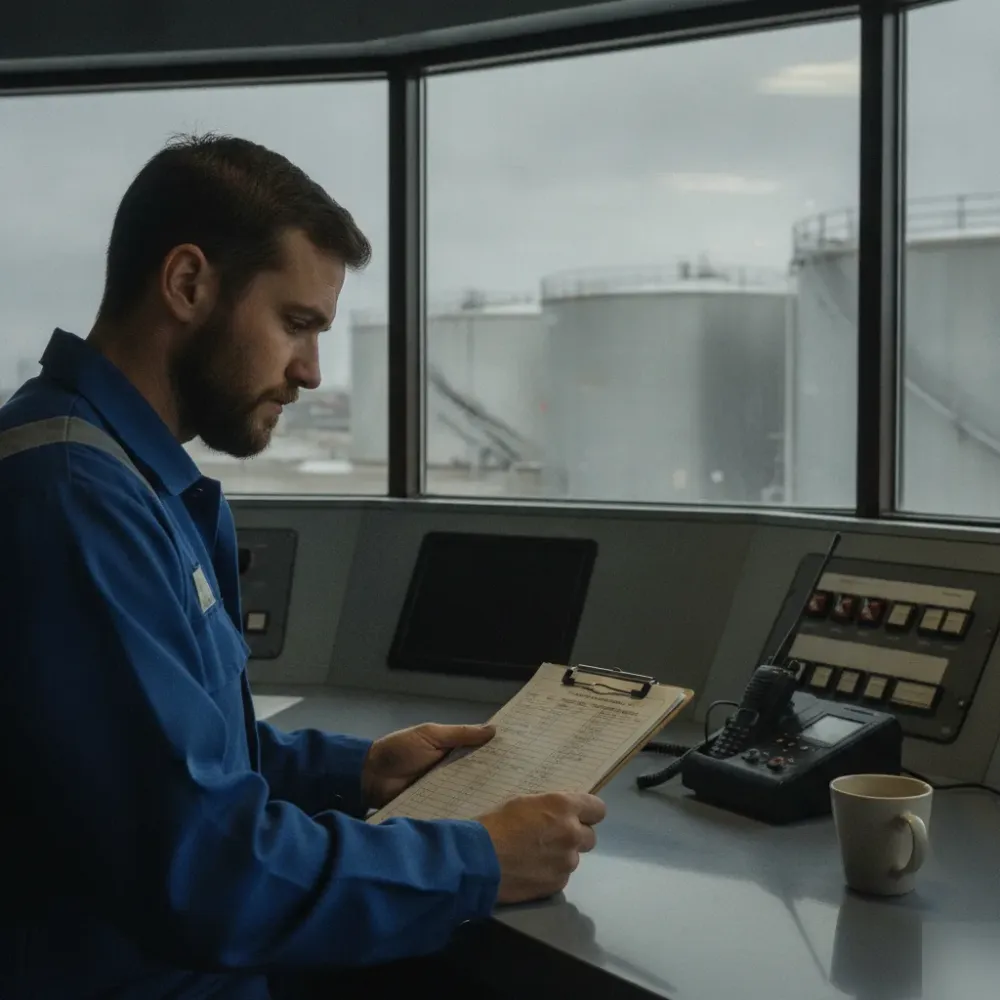
Routine, low-risk work rarely justifies the cost and scheduling hassle of a full point cloud capture and model build. That’s especially true when your existing documentation is trustworthy and the job in front of you is about observation, not modification.
- Routine visual inspections that only check for surface corrosion, coating wear, or obvious external damage
- Scheduled preventive maintenance where no nozzles, supports, piping, or internals are being added or relocated
- Minor bolt-on repairs or gasket replacements that don’t alter the vessel’s geometry
- Projects where a recent, verified as-built model already exists and covers the exact area of concern
- Internal cleaning or inspection cycles with no structural or dimensional changes planned
Skipping unnecessary modeling saves more than money, it also saves time. Scheduling a scan crew, processing the point cloud data, and building a model can tack days or even weeks onto a project timeline. If all your team really needs is to confirm wall thickness readings or check a coating’s condition, that time is better spent getting on with the maintenance itself.
Where things get more nuanced is field modifications. Even a small change, a relocated support bracket, an added nozzle, a rerouted pipe spool, can render existing as-builts unreliable for engineering work. Once any physical work has happened on or near the vessel since the last accurate documentation, that’s your cue: an updated model is worth the investment, particularly for tie-ins, structural analysis, or fabrication planning.
The simplest way to settle the question is a quick conversation about your vessel’s history and current documentation. A short call is usually enough to figure out, in a matter of minutes, whether new modeling is warranted or your existing records will do just fine.
Frequently Asked Questions
Common questions about Tank & Vessel Modeling
How long does an on-site tank or vessel scan take?
Most scans take just a few hours, though larger tank farms can run up to a full day. Our crew captures millions of data points across the tank, its nozzles, and surrounding piping before packing up. This short window matters for Calgary facilities where shutdown time is tight and every hour of access has a real cost. The heavy lifting happens after we leave, when we turn that scan data into a usable CAD model back at the office.
What happens when your crew arrives to scan our tank?
We start with a site assessment, checking access, safety requirements, and exactly which parts of the tank or vessel need scanning. From there, the crew sets up and captures the shell, nozzles, and nearby piping with a laser scanner. You won’t see equipment torn apart or process lines shut down for long stretches. It’s a quick, focused visit designed to get the data we need without tying up your operations for days.
Why do tank foundations on Calgary lease sites shift over time?
Frost heave is the main culprit on older lease sites north and east of Calgary. As the ground freezes and thaws each year, tank foundations and saddles can shift slightly, throwing off the original as-built drawings. This is exactly the kind of drift a laser scan catches that a paper drawing never will. If your tank has been in place for decades, it’s worth scanning before you plan any new tie-in or modification work.
How do I know if my tank’s drawings are still accurate?
Check the nozzle schedule first. If any nozzles were added, moved, or resized in the field and never got recorded, your drawing set is out of date. Other red flags include shell distortion, shifted foundations, or added insulation that never made it onto the original file. We treat every legacy drawing as a starting guess, not a fact, and confirm it with a scan before any new modeling begins.
Do I need an engineer-stamped model for my tank or vessel?
It depends on what the model is used for. A basic geometric model works fine for layout or clash checks, but pressure retaining vessels fall under CSA B51 and typically need design verification from a professional engineer registered with APEGA. Storage tanks without pressure retention may still need a stamp for wind loading, seismic anchoring, or foundation design. Our licensed engineers handle that review in-house, so there’s no separate handoff needed.
What do I receive once the modeling work is done?
You get a validated, fabrication-ready CAD file, not a physical product. The model includes dimensioned shells, nozzles, supports, and internals, checked against your existing drawings and, where needed, ASME or API standards. That file goes straight to your engineering or fabrication team without any extra re-measurement. It’s built to keep your project moving from concept through completion without redundant steps.
Recent Comments