Trusted design professionals since 1995
What’s Covered on This Page
- What Counts as Skid & Pump Package Modeling
- New-Build Versus Brownfield Retrofit Modeling
- When You Don’t Need Custom Skid Modeling
- Site Scanning and Modeling Steps for Calgary Projects
- Engineering Sign-Off and Alberta Pressure Equipment Rules
- How long does skid and pump package modeling usually take?
- What happens when your team arrives to scan our skid?
- Do I need custom 3D modeling if my pump skid vendor already gave me drawings?
- Why does Calgary’s climate matter for pump skid layout modeling?
- Can you model an existing skid if there are no accurate as-built drawings?
- What file formats do you deliver for fabrication or design changes?
What Counts as Skid & Pump Package Modeling
A skid package sounds simple on paper. In practice, it’s a dense arrangement of pumps, piping, valves, structural steel, and instrumentation, all packed onto one steel frame. Our modeling work captures every piece of that in three dimensions, whether the skid already sits on a Calgary lease site or still exists only as a design concept.
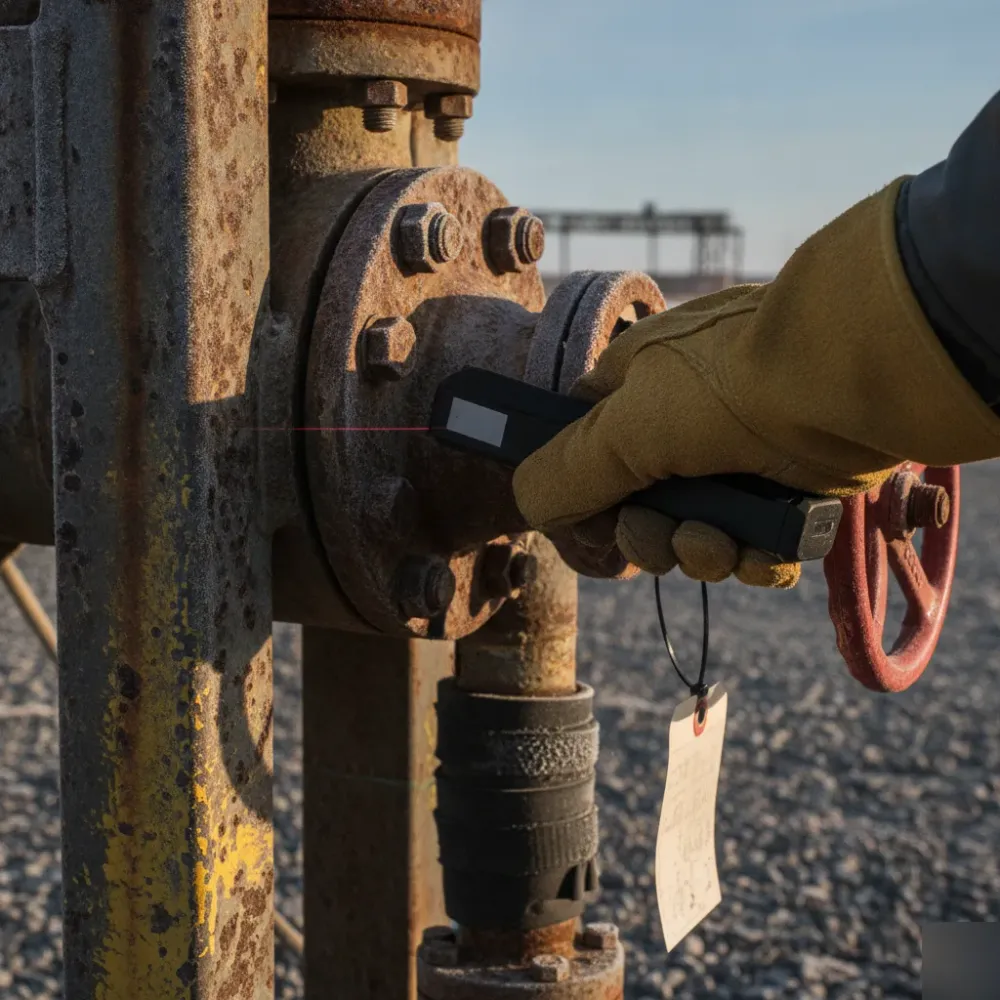
We build these models two ways. For new designs, our team develops the CAD model from engineering intent, piping specs, and equipment vendor drawings. For existing skids, we laser scan the physical package on site, then convert that point cloud into a clean, dimensionally accurate CAD model. Different starting points, same finish line: a model our engineers can validate and stamp.
Alberta winters push equipment layouts toward tight, insulated skid footprints, so clearance around pumps and valve manifolds matters more here than it would in a typical warehouse build. That’s one reason a stamped model, not a rough sketch, is worth the investment before fabrication starts.
- 3D pump skid and compressor skid models built to fabrication tolerance
- Gen-set package layouts coordinated with structural steel and piping
- Point cloud to CAD conversion from field laser scans (E57, RCP formats)
- Final deliverables in STEP, IGES, or DWG depending on downstream use
- Engineering stamp and sign-off on every validated model
If your project involves a tank, vessel, or full lease site alongside the skid, that scope naturally extends into our oil and gas facility modeling work. A skid rarely sits alone, and our models are built to reflect that.
New-Build Versus Brownfield Retrofit Modeling
New-build modeling starts with a blank canvas. We work from vendor data sheets, P&ID references, and client specifications to build the 3D model before the package is ever fabricated. Brownfield retrofit work is a different animal entirely. The skid already exists, it’s bolted down somewhere at a site in the Calgary region, and nobody has an accurate model of it.
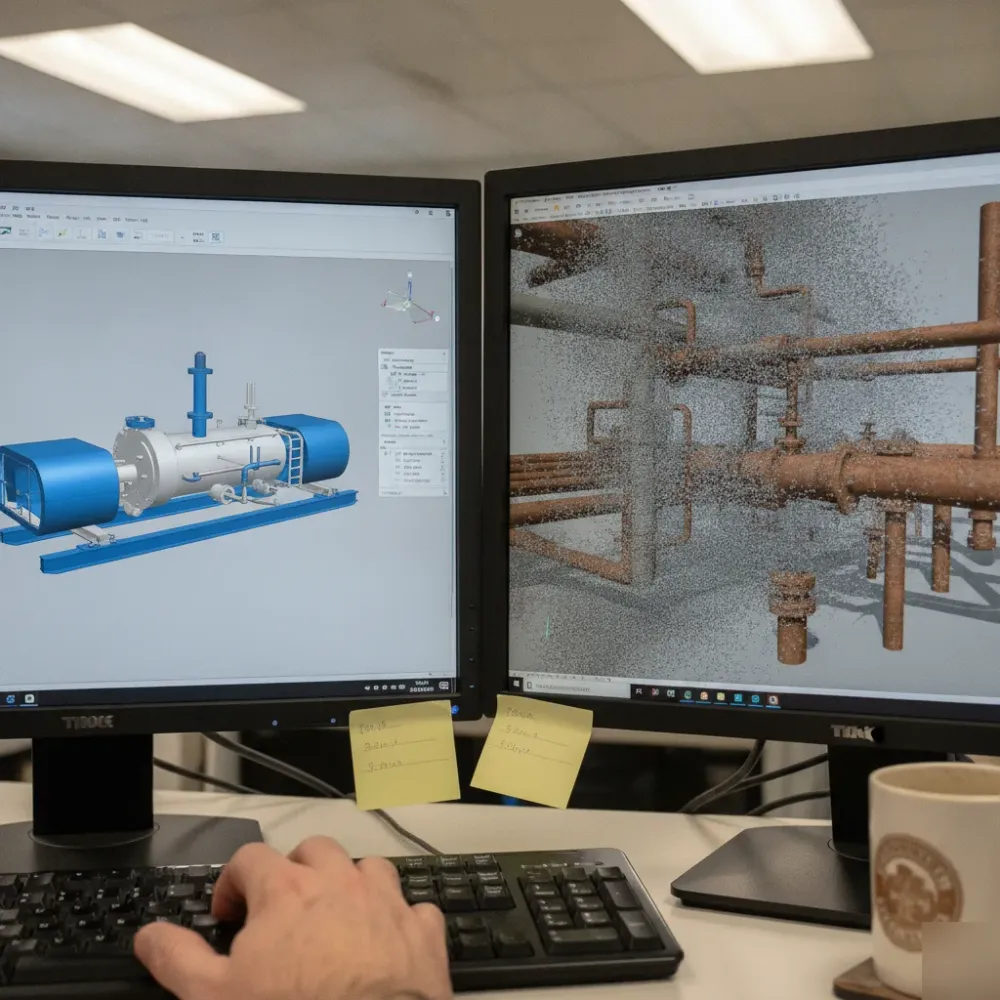
A lot of the older oil batteries and lease sites around Calgary were built decades before digital as-builts were standard practice. So when a client needs to add a pump, reroute piping, or fit a new component onto an existing skid, there’s often nothing to design from except the physical steel itself. That’s where 3D laser scanning comes in. We capture the existing package as a point cloud, then convert that into a usable engineering model.
- Point cloud capture of the existing skid, piping, and structural supports
- Point cloud to CAD conversion for accurate geometry
- STEP, IGES, or STL exports depending on downstream use
- Stamped, engineer-validated model ready for fabrication or design changes
Generally, retrofit work demands tighter tolerance checking than new-build. Existing steel shifts, settles, and gets field-modified over the years, small deviations a spec sheet would never catch. Our in-house licensed engineers review the converted model against the scan data before anything gets stamped for fabrication or design change. That one step cuts out a lot of the rework we see on retrofit projects that skip it.
When You Don’t Need Custom Skid Modeling
Not every pump skid or package needs custom 3D modeling. If your vendor is supplying a standard, catalog-rated package with certified general arrangement drawings already included, you probably don’t need us to remodel it from scratch. This work earns its cost when a project involves custom piping tie-ins, tight lease site constraints, or structural steel that has to interface with equipment nobody ever modeled in the first place.
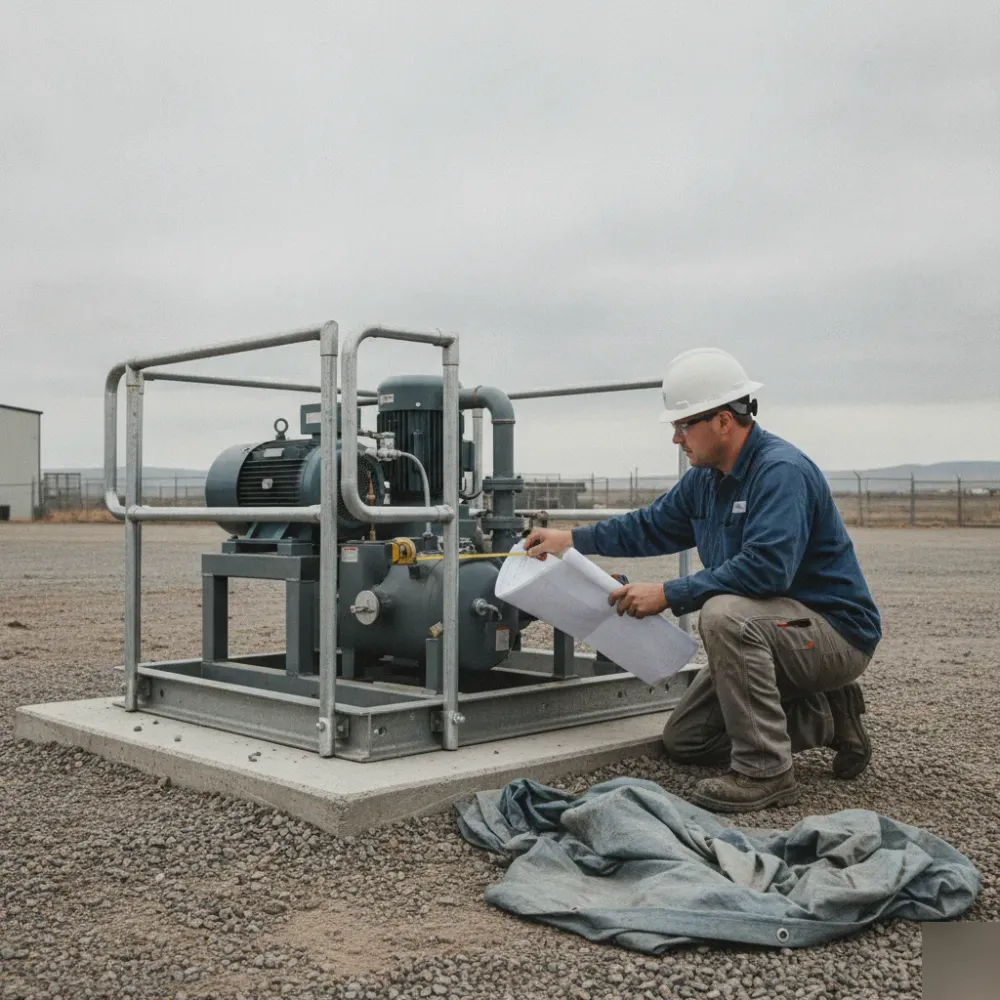
There are also cases where a quick field sketch or a marked-up P&ID is genuinely enough. A minor valve swap, a bolt-on instrumentation change, or a like-for-like pump replacement rarely justifies full 3D modeling and engineering stamping.
- Your skid vendor already provides stamped general arrangement drawings for the exact configuration you are installing
- The change is a minor mechanical swap with no piping, structural, or foundation impact
- You only need a visual reference, not a coordinated deliverable for procurement or fabrication
- The equipment is standalone and does not tie into existing piping, structural steel, or site grading
If any of those describe your situation, save the budget. Where things get complicated is retrofits into an active lease site, where existing conditions are undocumented and the new skid has to fit around structural steel and piping that was never drawn accurately to begin with. That’s where modeling stops being optional.
Site Scanning and Modeling Steps for Calgary Projects
This work starts in the field, not at a workstation. Our team laser scans the existing skid, piping, and support steel on site, capturing every flange, valve, and structural member exactly as it sits. Many Calgary area lease sites have gone through years of additions and retrofits, so the as-built condition rarely matches the original drawing set. Closing that gap is exactly what the scan is for.
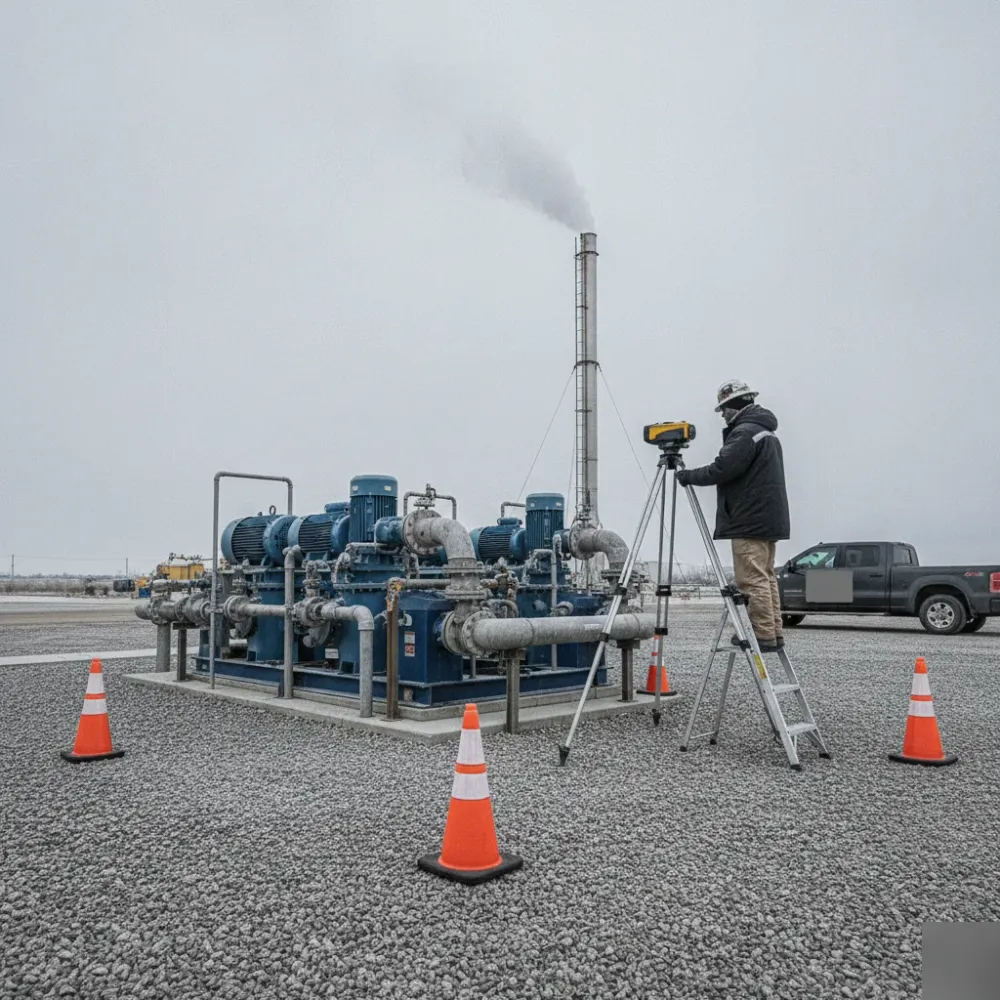
- Field scan the skid, pump package, and surrounding piping with a laser scanner, producing a dense point cloud in E57 or RCP format.
- Register and clean the point cloud, checking for occlusions around congested piping or stacked equipment before modeling begins.
- Convert the point cloud into a full 3D model in CAD, rebuilding piping, structural steel, and equipment geometry to true dimensions.
- Export deliverables in the formats your team needs, whether that is STEP, IGES, STL, or DWG for fabrication and design use.
- Route the model through our licensed engineers for review, sign-off, and stamping before it goes back to you.
That last step matters most. A model without engineering validation is just geometry. A stamped, engineer-reviewed model is something your fabrication shop and design team can actually build from, without a second round of field verification.
We use this same workflow for tank and vessel modeling, compressor and gen-set packages, and oil battery projects, so a Calgary operator moving between package types gets a consistent process and a consistent deliverable format every time.
Watch Our Video
See How We Handle Skid & Pump Package Modeling in
Masters-3D
Engineering Sign-Off and Alberta Pressure Equipment Rules
A skid or pump package model is only as useful as the review behind it. Pressure piping, vessel supports, and structural steel on a Calgary lease site or battery location all fall under Alberta’s pressure equipment framework, administered through the Alberta Boilers Safety Association (ABSA). We build every model with that framework in mind from the start, not as an afterthought once the geometry is finished.
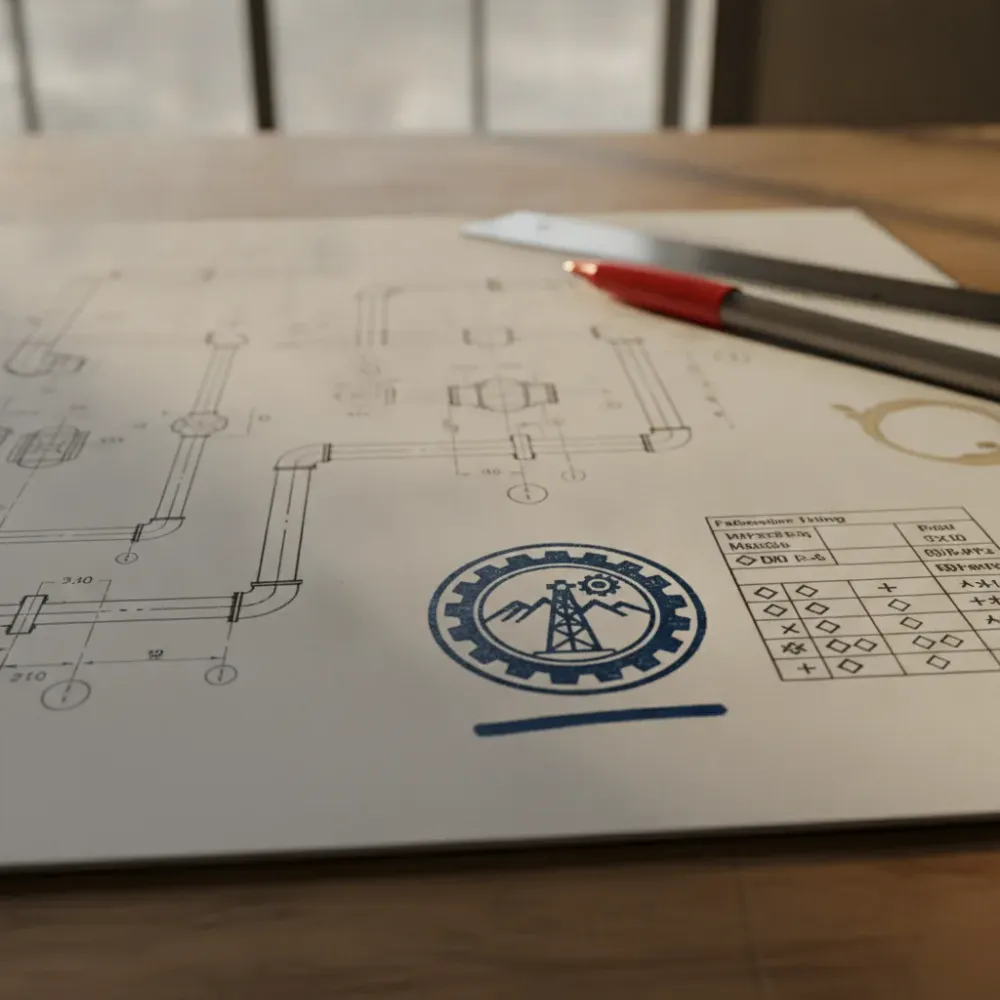
Our team includes licensed engineers, so the model gets checked against real loading, pipe stress, and support conditions before it ever reaches a fabricator. That review is what separates a clean 3D model from a stamped, validated drawing set a shop can actually build from. Skip that step, and you’re gambling on rework once the skid hits the floor.
When we hand off a stamped package, procurement and engineering leads get more than a picture of the skid. They get a documented basis for fabrication decisions, material selection, and inspection sign-off.
- Stamped, engineer-reviewed drawing set covering piping, structural steel, and supports
- CAD model in STEP, IGES, or DWG format matched to your fabricator’s workflow
- Design validation notes tied to pressure equipment and structural loading
- As-built reference tied back to the original scan or field data
That last point matters more than people expect. A model without a paper trail back to real field conditions is just a guess dressed up in clean lines.
Frequently Asked Questions
Common questions about Skid & Pump Package Modeling
How long does skid and pump package modeling usually take?
Timeline depends on whether we’re modeling a new design or scanning an existing skid. New-build modeling from vendor data sheets and P&IDs moves faster since there’s no field work involved. Brownfield retrofit projects take longer because we scan the physical skid on site first, then convert that point cloud into a stamped CAD model. Congested piping or stacked equipment on older Calgary lease sites can add time to the point cloud cleanup step before modeling even starts.
What happens when your team arrives to scan our skid?
Our team sets up a laser scanner on site and captures every flange, valve, and structural member on your skid exactly as it sits today. This produces a dense point cloud in E57 or RCP format. We check for occlusions around tight piping or stacked equipment before moving forward. Since many Calgary lease sites have gone through years of unrecorded additions, this scan closes the gap between what’s on paper and what’s bolted down.
Do I need custom 3D modeling if my pump skid vendor already gave me drawings?
Not always. If your vendor supplied a standard, catalog-rated package with certified general arrangement drawings for your exact configuration, you likely don’t need us to remodel it. Custom modeling earns its cost when your project involves custom piping tie-ins, tight lease site constraints, or structural steel that has to interface with equipment nobody ever modeled. A minor valve swap or like-for-like pump replacement usually doesn’t justify full modeling and stamping either.
Why does Calgary’s climate matter for pump skid layout modeling?
Alberta winters push skid designs toward tight, insulated footprints, which changes how much clearance you have around pumps and valve manifolds. That clearance matters more here than on a typical warehouse build, so a stamped model catches interference issues before steel gets cut. Getting this wrong on a Calgary lease site in winter means costly field fixes in freezing conditions, which is exactly what accurate modeling is meant to prevent.
Can you model an existing skid if there are no accurate as-built drawings?
Yes, this is common with older oil batteries and lease sites around Calgary built before digital as-builts were standard. We laser scan the existing skid, piping, and structural supports, then convert that point cloud into a usable CAD model. Our licensed engineers review the model against the scan data before stamping it, since existing steel often shifts or gets field-modified over the years in ways a spec sheet would never catch.
What file formats do you deliver for fabrication or design changes?
We deliver final models in STEP, IGES, or DWG depending on how your team plans to use them downstream. For retrofit projects, STL exports are also available when needed. Every deliverable comes with an engineering stamp and sign-off once our licensed engineers validate the model against the original scan or design intent, so your fabrication or procurement team is working from a file that matches the steel.
Recent Comments