Trusted design professionals since 1995
What’s Covered on This Page
- Signs Your Facility Needs a New 3D Model
- The Scan-to-Stamped-Drawing Process
- What to Ask Before Hiring a Modeling Provider
- When You Don’t Need Full Facility Modeling
- Planning Your Scan Around a Calgary Turnaround Window
- Do you travel to facilities outside Calgary, like Nisku or Fort McMurray?
- What should we expect during the on-site laser scan?
- Why don’t our current drawings match what’s built at our facility?
- Does the final model come with a professional engineer’s stamp?
- Can scanning happen during a live plant walk, or does it need a full shutdown?
Signs Your Facility Needs a New 3D Model
Most facility teams don’t think about their 3D model until a project stalls. Then it’s the same story every time: someone pulls the old drawing package, and the piping run in the field doesn’t match the plot plan on the screen.
Calgary lease sites built or expanded in stages often carry decades of incremental changes that were never redrafted. A gen set gets added in one phase, a pump skid gets swapped in another, and before long the as-built package is a patchwork instead of one accurate model.
- Recent tank, vessel, or skid replacements that haven’t been captured in the current drawing set
- Piping or structural steel modifications made in the field without a corresponding design update
- Multiple drawing versions in circulation with no clear record of which one reflects current conditions
- Planned tie-ins, expansions, or compressor and gen set installations near existing structures
- Any incident or near-miss that raises questions about actual clearances or structural condition
When we spot any of these during a Calgary facility walkthrough, that’s our cue: a full 3D laser scan and rebuilt CAD model will save far more in avoided rework than it costs to commission upfront.
The Scan-to-Stamped-Drawing Process
A stamped drawing doesn’t roll out of a scanner. It’s the end result of a defined sequence of steps, each one calling for different expertise, and the whole thing only holds together when one team controls it from start to finish. For facilities around Calgary, Nisku, and the Fort McMurray corridor, that continuity isn’t a nice-to-have. Process piping, wellsite equipment, and tank farms change hands between engineering firms, EPCs, and maintenance contractors constantly, and a break in the chain between capture and drafting is exactly where scope gets lost and rework begins.
- Scope definition: confirming which units, piperack sections, or tank areas need capture, what accuracy class the drawings require, and whether a P.Eng stamp is needed for the final deliverable.
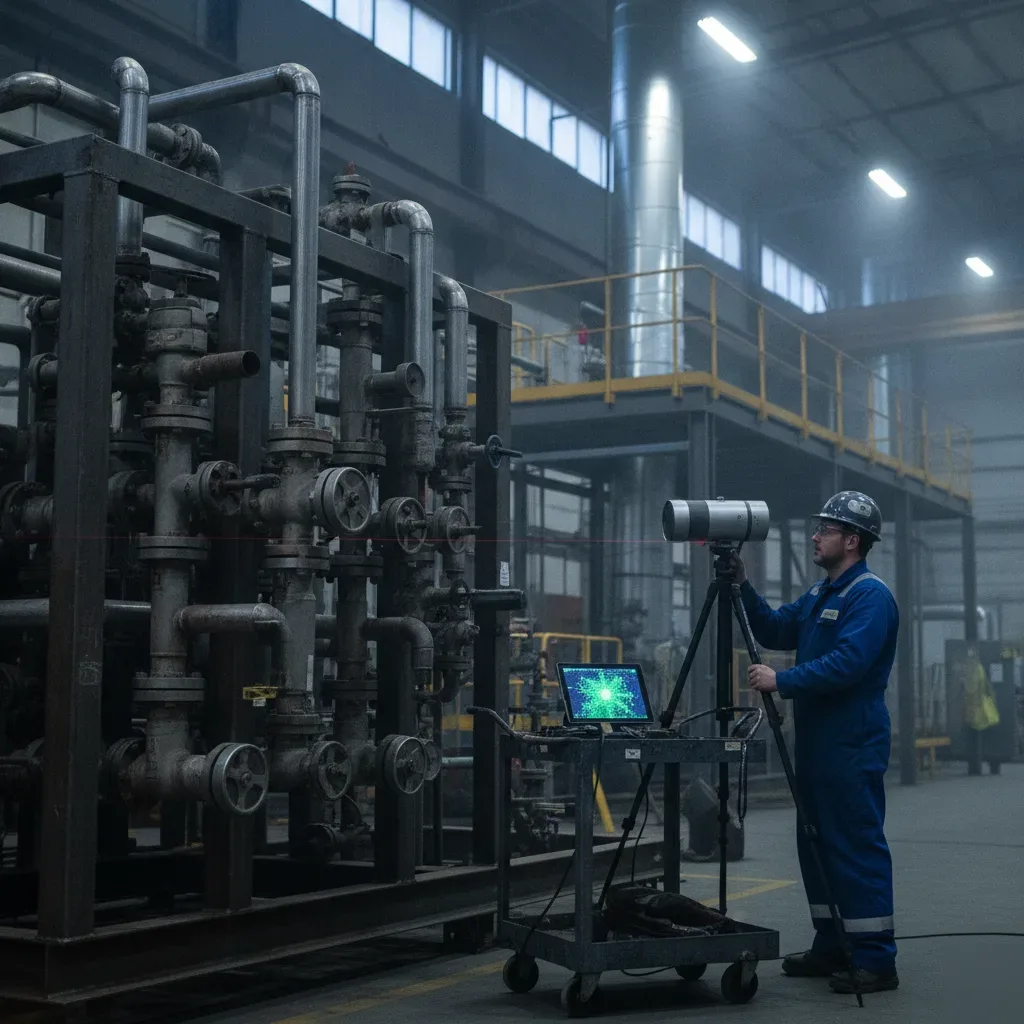
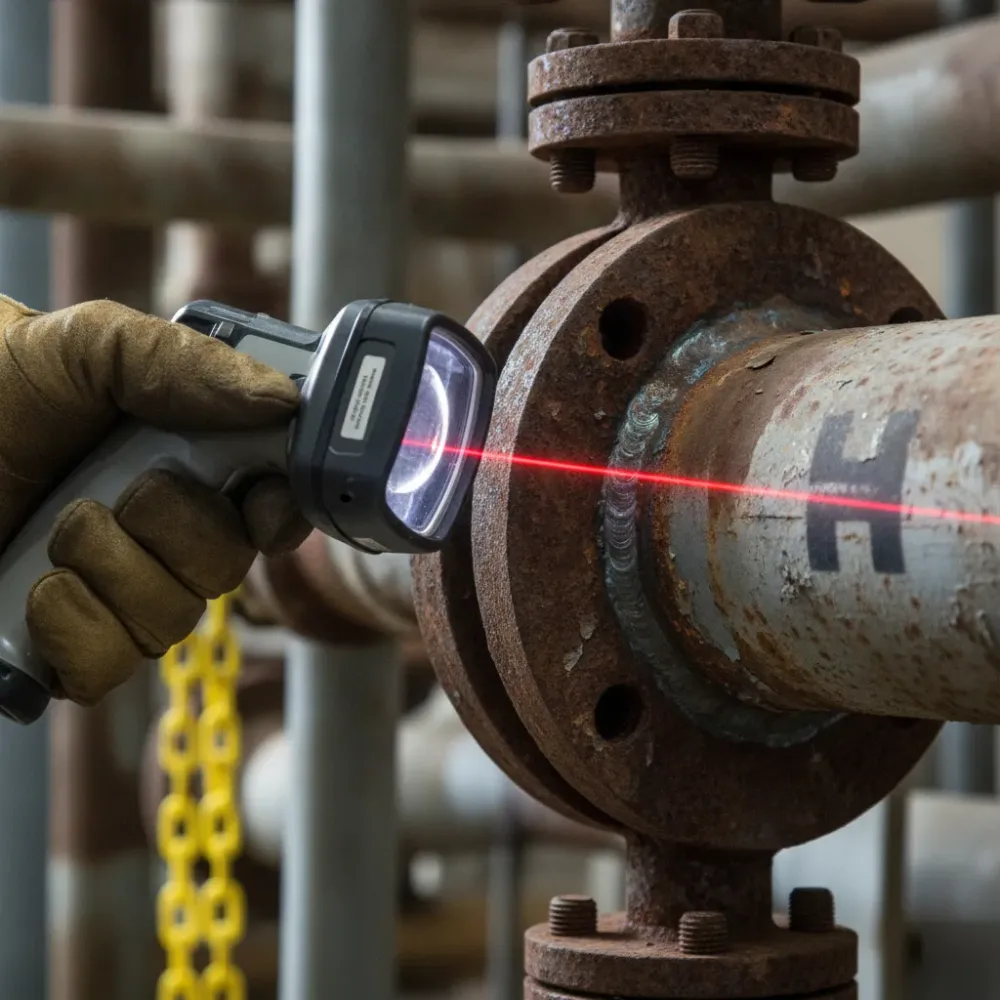
- Site scan and data capture: LiDAR or laser scanning performed on-site, often during a scheduled shutdown window or a live-plant walk with safety escorts and gas monitoring in place.
- Point cloud processing: registering and cleaning millions of data points into a single coordinate-accurate dataset, removing noise from steam, personnel movement, and reflective surfaces common on skids and vessels.
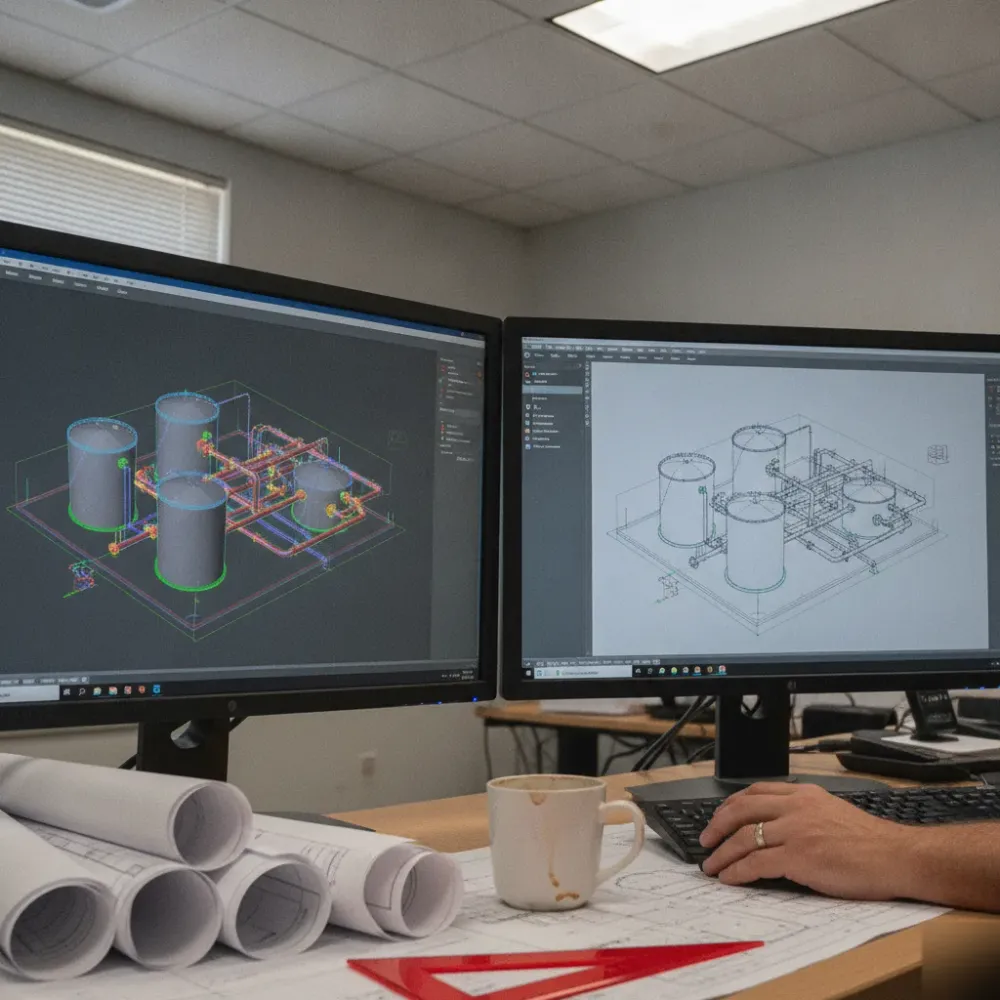
- 3D model build: converting the processed point cloud into intelligent geometry, pipe runs, structural steel, and equipment components rather than a static image.
- Drafted deliverables: producing isometrics, P&IDs, general arrangement drawings, or as-built layouts in the format the client’s engineering group uses.
- Engineering review and sign-off: where a stamp applies, a licensed engineer reviews the model and drawings against code and site conditions before issuing the final package.
It’s worth being blunt about one thing: a raw point cloud or an unreviewed scan file isn’t a finished deliverable, it’s raw survey data. Turning it into something a Calgary engineering firm can stamp, an operator can use for a tie-in, or a contractor can build from takes the modeling and drafting stages in between, plus a qualified review wherever regulatory sign-off is required under APEGA standards. Jumping straight from scan to stamp is where corners get cut.
The real advantage of running all six stages under one roof is accountability. There’s no handoff between a scanning vendor, a separate modeling shop, and a third-party drafting house, each one interpreting the last group’s work its own way. When one team scopes the job, captures the data, builds the model, drafts the output, and coordinates the engineering review, that team carries the context of the facility all the way through. That shortens turnaround and cuts down the odds that field conditions get misread on paper.
What to Ask Before Hiring a Modeling Provider
Choosing a facility modeling provider in Calgary takes more than a rate comparison. Most of these decisions get made from a downtown head office while the actual facility sits somewhere else in Alberta entirely, maybe Fort McMurray, maybe Grande Prairie, maybe a sour gas plant outside Medicine Hat, which means the person signing the contract often never sets foot on site. That distance is exactly why the right questions matter so much. Once the contract is signed, there’s not much room left to catch gaps in scope or qualifications.
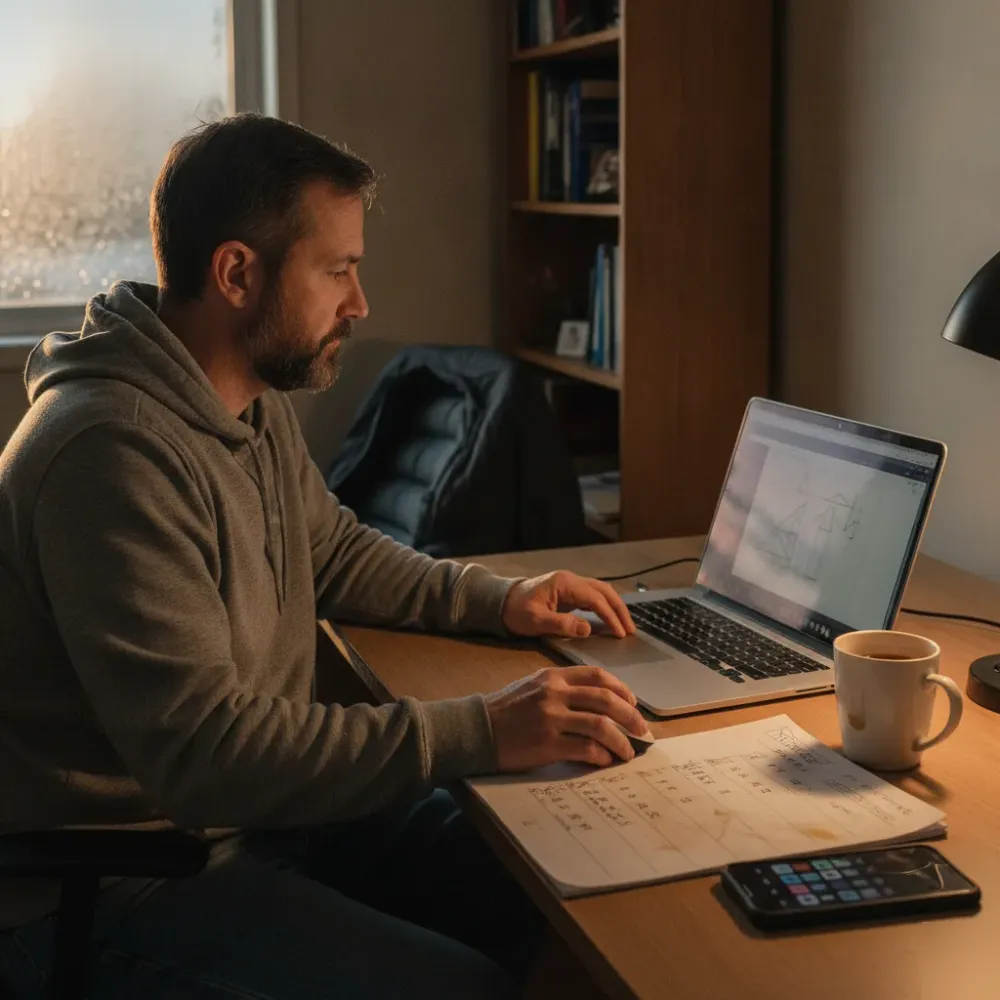
Start by asking about sector-specific history. A firm that has modeled office towers or municipal water plants can hand you a clean-looking 3D file, but oil and gas facilities come with their own demands: process piping, hazardous area classification, tie-in sequencing during turnarounds. None of that shows up in a generic portfolio. Ask for examples from comparable work, ideally upstream batteries, midstream compressor stations, or downstream units, and ask specifically who on the team was involved.
The most important question, though, is whether deliverables get reviewed and stamped by a professional engineer licensed under the Engineering and Geoscience Professions Act. Plenty of drafting and scanning firms turn out models that look convincing without any licensed engineering oversight behind them. That gap tends to surface at the worst possible moment, during a regulatory submission or an internal audit, when a model with no engineer review simply can’t be relied on for design decisions. In-house licensed engineers who know the modeling software and Alberta’s regulatory landscape are the real reason to pay a premium.
- Which facilities has your team modeled, and can you name the sector: upstream, midstream, or downstream?
- Are deliverables reviewed or stamped by a professional engineer under the Engineering and Geoscience Professions Act?
- What output formats do you provide, and are they compatible with our existing CAD or asset management systems?
- How do you handle site access, safety orientations, and confined space or H2S protocols during scanning?
- Who is our point of contact if the site is outside Calgary but our office isn’t?
- What happens if field conditions differ from the original scan or as-built drawings?
Last thing: nail down output formats early. Point clouds, IFC files, and native CAD formats don’t just translate into each other, and a mismatch here can trigger expensive rework down the line. If a provider asks about your downstream software before they even quote the job, that’s usually a good sign, it means they’ve hit this problem before and learned where projects tend to break down.
Not sure what your Oil & Gas Facility Modeling project needs? Ask us.
Call now. Masters-3D is ready to help.
When You Don’t Need Full Facility Modeling
Not every project on a Calgary lease site or in-plant location calls for a full facility model. If you’re dealing with one tank, one skid, or a single compressor, and your existing drawings still hold up, a narrower scope will usually get you there faster.
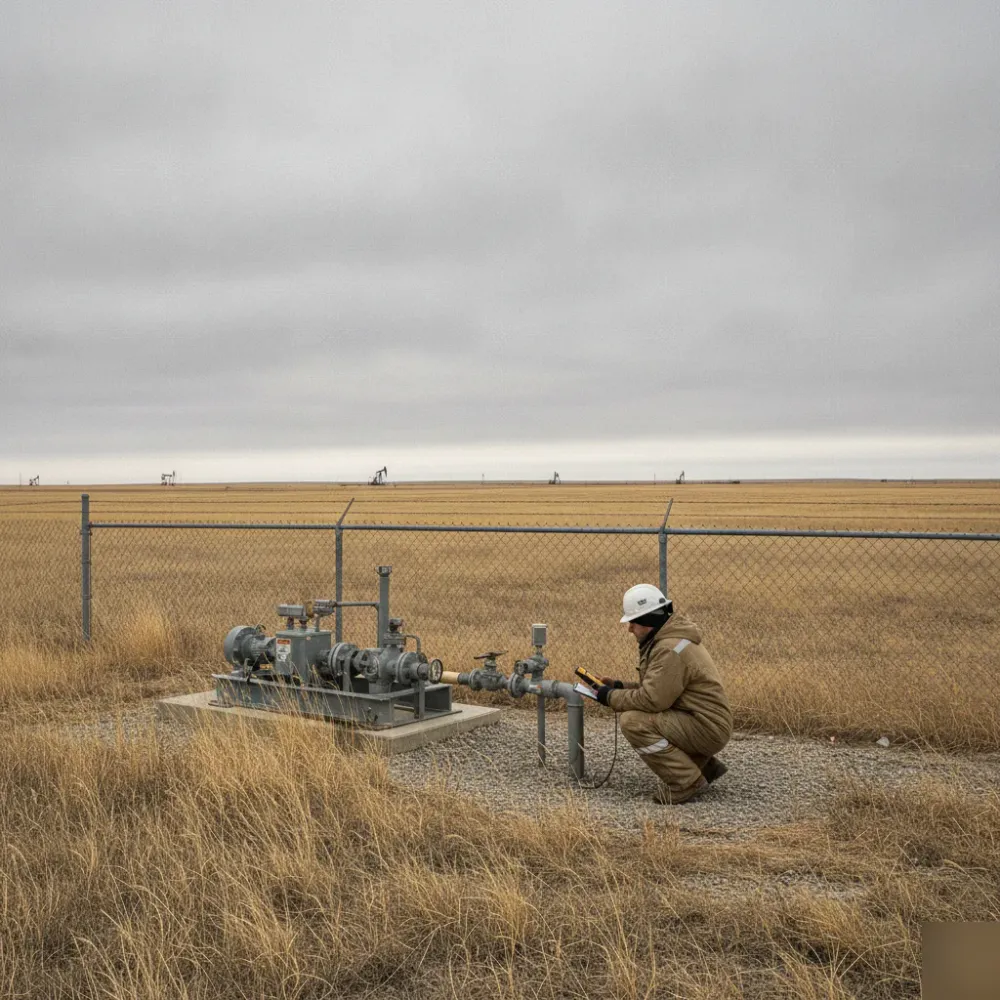
Full facility modeling earns its cost when a site has multiple interconnected systems, undocumented piping runs, or structural steel that’s shifted after years of field changes. If none of that describes your job, a smaller service is probably the better fit.
- A single vessel or tank needs updated dimensions: Tank & Vessel Modeling covers it on its own, no need to scan the whole lease site
- One compressor or gen-set needs a CAD model for a retrofit: Compressor/Gen-Set Modeling handles it without rebuilding the full plot plan
- A single part needs reverse engineering from a physical sample: Reverse Engineering (Physical-to-Digital) turns it into a STEP or IGES file without a site visit
- Your P&IDs are accurate and only the plot plan needs updating: a targeted as-built scan of the affected area is often all you need
- You need to check one structural steel member against design intent: a focused Structural Steel Scanning pass covers it without modeling the entire facility
If your project fits one of these, just say so when you call. We’ll scope it to the work that’s actually needed, not the biggest package on the shelf. That’s the straight answer, and for a lot of smaller Calgary sites, it’s the right one.
Watch Our Video
See How We Handle Oil & Gas Facility Modeling in
Masters-3D
Planning Your Scan Around a Calgary Turnaround Window
You can’t just pencil in a full-facility scan whenever it’s convenient. Live process equipment, pressurized lines, rotating machinery, and confined spaces all restrict what a crew can safely and legally capture while a plant is running. That’s why most scans of Calgary-area facilities are timed to a turnaround or planned shutdown, when units are already depressurized, isolated, and opened up for inspection. Riding along with that window lets the crew reach pipe racks, vessel internals, and skid packages that are normally hidden behind operating equipment or fenced off by safety exclusion zones.
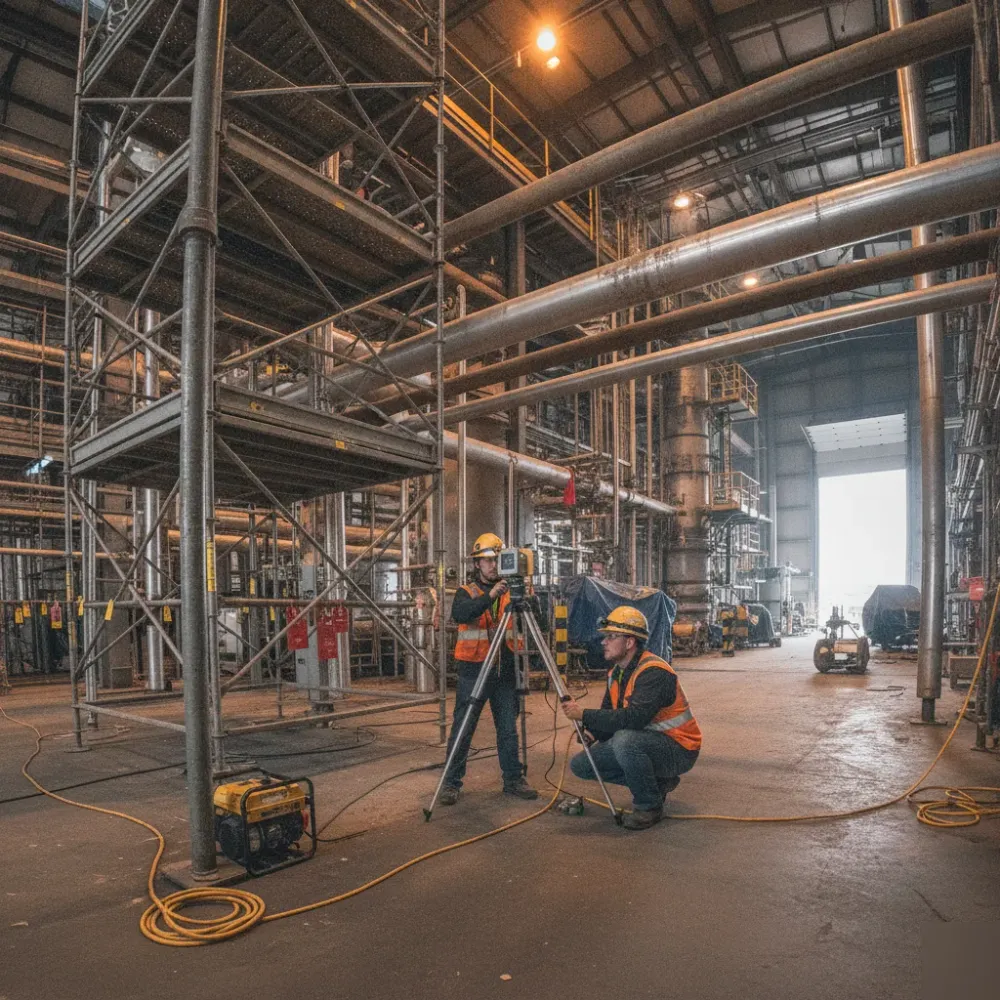
Turnaround windows around Calgary are usually locked in months ahead, and scan scheduling has to fit into that sequence without turning into the thing that delays startup. Looping in the turnaround planner early lets the scanning team see which systems come offline on which days, so crews can move through units as they open rather than sitting around waiting for the whole facility to clear at once.
Calgary’s climate throws in another wrinkle that facilities in milder regions don’t have to think about. Outdoor assets like tank farms, compressor stations, and above-ground pipeline corridors sit exposed to temperature swings that can stay well below freezing for weeks, plus wind, snow load, and ice buildup on catwalks and ladders. Cold hits both equipment and crews hard, and safety rules for working at height or on exposed steel get noticeably stricter once winter sets in.
- Confirming turnaround dates and isolation sequences with the facility’s planning team before locking in a scan schedule
- Building in a weather-window buffer for outdoor tank farm and compressor station scans between November and March
- Prioritizing exterior and elevated scans on the mildest days available within the turnaround period
- Sequencing interior vessel and piping scans for cold or high-wind days when outdoor work isn’t practical
- Coordinating with site safety officers on cold-weather PPE and equipment limits for scanning crews
Get this sequencing wrong and you’re not just looking at a scheduling headache, you could miss the turnaround entirely and wait months or years for another shot at certain assets. A scanning partner who understands how Calgary turnarounds and winter weather play off each other can build a realistic plan that protects the outage schedule while still delivering full coverage of the facility.
Frequently Asked Questions
Common questions about Oil & Gas Facility Modeling
Do you travel to facilities outside Calgary, like Nisku or Fort McMurray?
Yes, we work at sites across Alberta, including Nisku and the Fort McMurray corridor. Oil and gas facilities are rarely built right in the city, so we plan travel and scheduling around your shutdown window or live-plant access needs. We coordinate safety escorts and gas monitoring ahead of time so the visit runs smoothly. If your site is in a remote lease area, tell us early. We can build travel time into the project timeline so it doesn’t delay your drawing deliverables.
What should we expect during the on-site laser scan?
You can expect our crew to capture the site with LiDAR equipment while following your safety protocols, often during a scheduled shutdown or a live-plant walk. We bring gas monitoring and safety escorts as needed. The scan itself is quick and non-invasive, but the real work happens after: cleaning millions of data points and removing noise from steam, moving personnel, or reflective surfaces. That processing step is what turns a raw scan into an accurate, coordinate-based dataset.
Why don’t our current drawings match what’s built at our facility?
This happens because field changes rarely get redrafted right away. Calgary lease sites built or expanded in stages often carry years of small changes, like a gen set added in one phase and a pump skid swapped in another, that never made it back into the drawing set. Over time, the as-built package turns into a patchwork instead of one accurate model. A fresh laser scan and rebuilt 3D model fixes this gap before it causes clash errors during your next project.
Does the final model come with a professional engineer’s stamp?
It can, and for most regulatory or design work, it should. A raw point cloud or unreviewed scan file is just survey data, not a finished deliverable. Getting from scan to stamped drawing means running the model and drafting stages, then having it reviewed by an engineer licensed under APEGA. Skipping that review step is where a lot of facility teams run into trouble later, usually during a regulatory submission or internal audit.
Can scanning happen during a live plant walk, or does it need a full shutdown?
Both options work, depending on your facility’s schedule and risk tolerance. Some Calgary-area sites prefer a scheduled shutdown window so crews can access piperack sections and tank areas without interference. Others run us through as a live-plant walk with safety escorts and gas monitoring in place. We scope this out with you ahead of time, based on which units or areas need capture and what accuracy class your drawings require.
Recent Comments