
Trusted design professionals since 1995
What’s Covered on This Page
- Diagnosing Whether a Part Needs Production-Grade Printing
- Reverse Engineering Legacy Parts With No CAD File
- Material Selection for Oil & Gas and Industrial Service Conditions
- Engineering Validation and Stamping Before a Part Goes Into Service
- When Prototyping Is Enough and Production Printing Isn’t
- What should I bring in when I need a part reverse engineered or reprinted?
- How long does it take to get a production part after the engineering review?
- Does Calgary’s winter weather change which material you pick for outdoor parts?
- Can you make a replacement part if the original manufacturer is gone and there’s no CAD file?
- How do you decide if a part is ready for production printing or still just a prototype?
Diagnosing Whether a Part Needs Production-Grade Printing
Not every printed part deserves the production label. A prototype just needs to confirm a design fits and moves the way you expect. A production part has to keep working on a compressor skid or a lease site pump package for months, sometimes years, without giving out. We draw that line early, because treating a prototype like it’s ready for the field is exactly how failures happen out there.
We work through three questions first: what load is this part carrying, what environment does it live in, and how many cycles or hours does it need to survive. A bracket on a gen set enclosure deals with vibration and swinging temperatures. A fitting on an oil battery skid deals with pressure and chemical exposure. Each answer shifts the material choice, the wall thickness, and sometimes the printing process altogether.
- Load path and stress concentration points identified through CAD review
- Material selection matched to temperature range and chemical exposure
- Tolerance requirements checked against the mating assembly, not just the drawing
- Duty cycle and expected service life confirmed with the project team
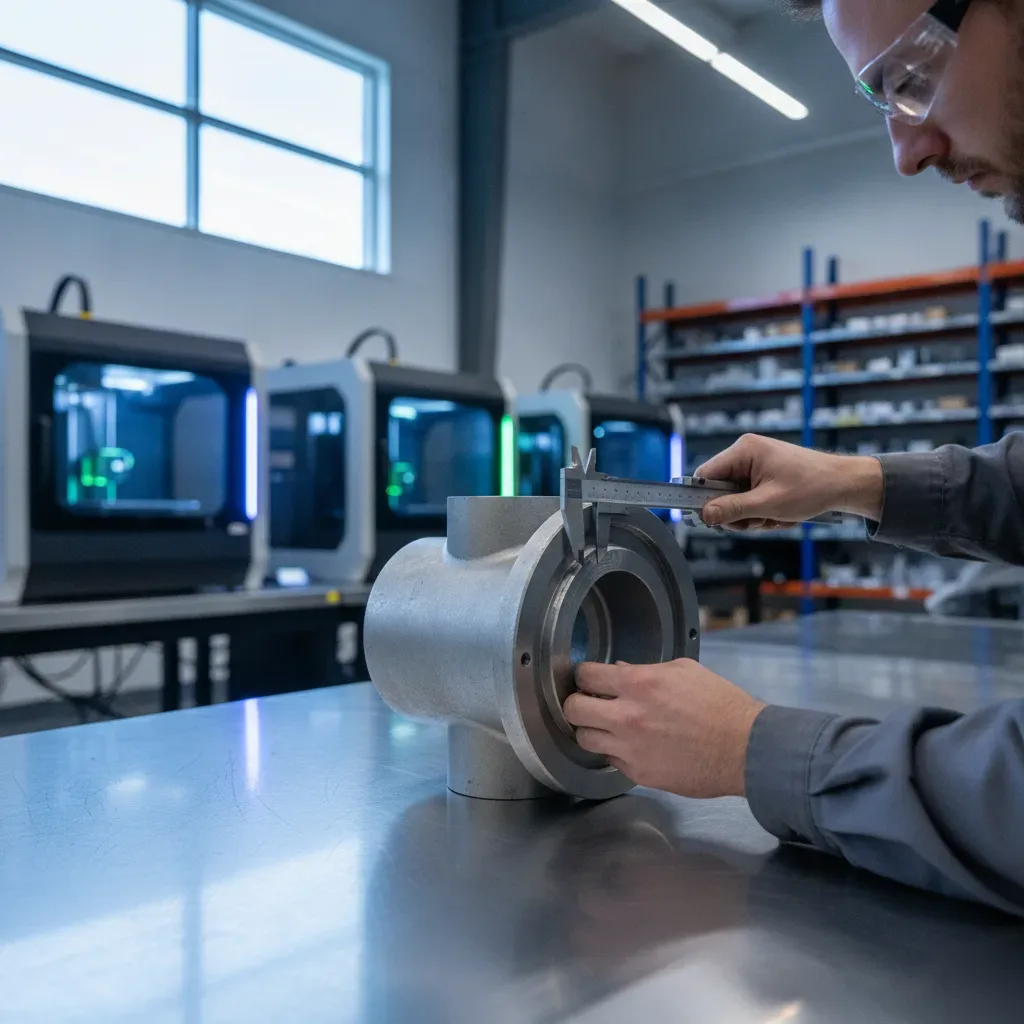
This is the step where our licensed engineers really justify their place in the process. A stamped, validated drawing means someone with real engineering accountability reviewed the load case, not just the mesh on a screen. That review is what lets a printed part sit right next to machined steel on a compressor package and hold up its end of the bargain.
Reverse Engineering Legacy Parts With No CAD File
A worn impeller pulled off an aging pump skid, a bracket salvaged from a decommissioned gen set, a fitting on a lease site tank battery installed decades before anyone thought to save the drawing. Parts like these land on our bench with no CAD file to work from, and that’s exactly where reverse engineering earns its keep in production-grade printing.
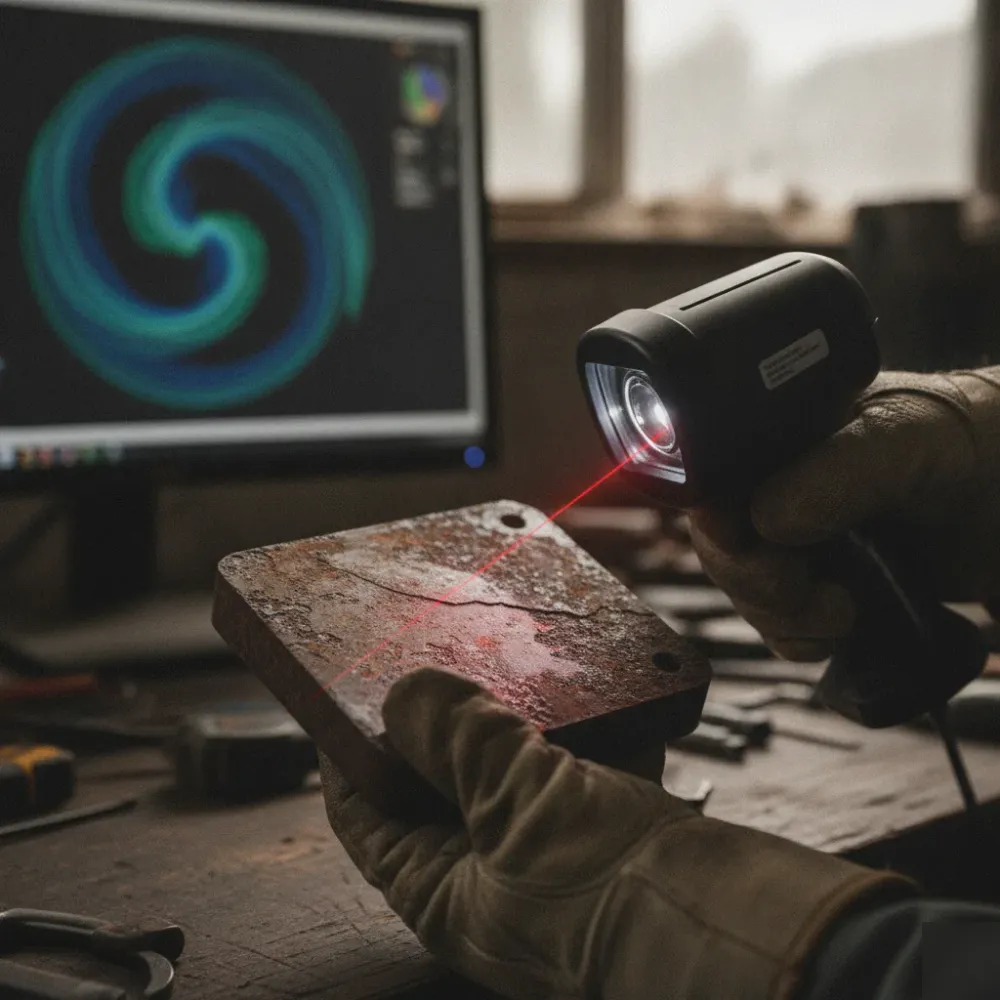
We start with 3D laser scanning of the physical part, which picks up complex geometry that calipers and hand measurements simply miss. That scan data, whether it’s a point cloud or an E57 file, gets converted into a solid CAD model in STEP or IGES format. From there, our licensed engineers validate tolerances, fits, and material behavior before any file is cleared for printing.
This matters most on legacy oil and gas equipment across Alberta, where the original manufacturer may no longer be around and replacement lead times can drag on for months.
- 3D scan capture of the worn or obsolete part
- Point cloud to CAD conversion (STEP, IGES, STL)
- Engineering review for fit, tolerance and material spec
- Stamped, validated drawing package for sign-off
- Print-ready file for the production run
We see this pattern constantly on compressor and skid components, where the cost of downtime dwarfs whatever effort reverse engineering takes. A stamped drawing at the end of that process means the reproduced part isn’t a guess. It’s an engineered replacement built to hold up in service.
Material Selection for Oil & Gas and Industrial Service Conditions
Production-grade printing only earns its keep on a lease site or in a compressor package if the material actually matches the load, temperature, and chemical exposure the part will face in service. So we start every material conversation with the operating environment, not the geometry. A bracket for a gen-set enclosure and a fitting near a produced-water line face very different demands, even when they look nearly identical on screen.
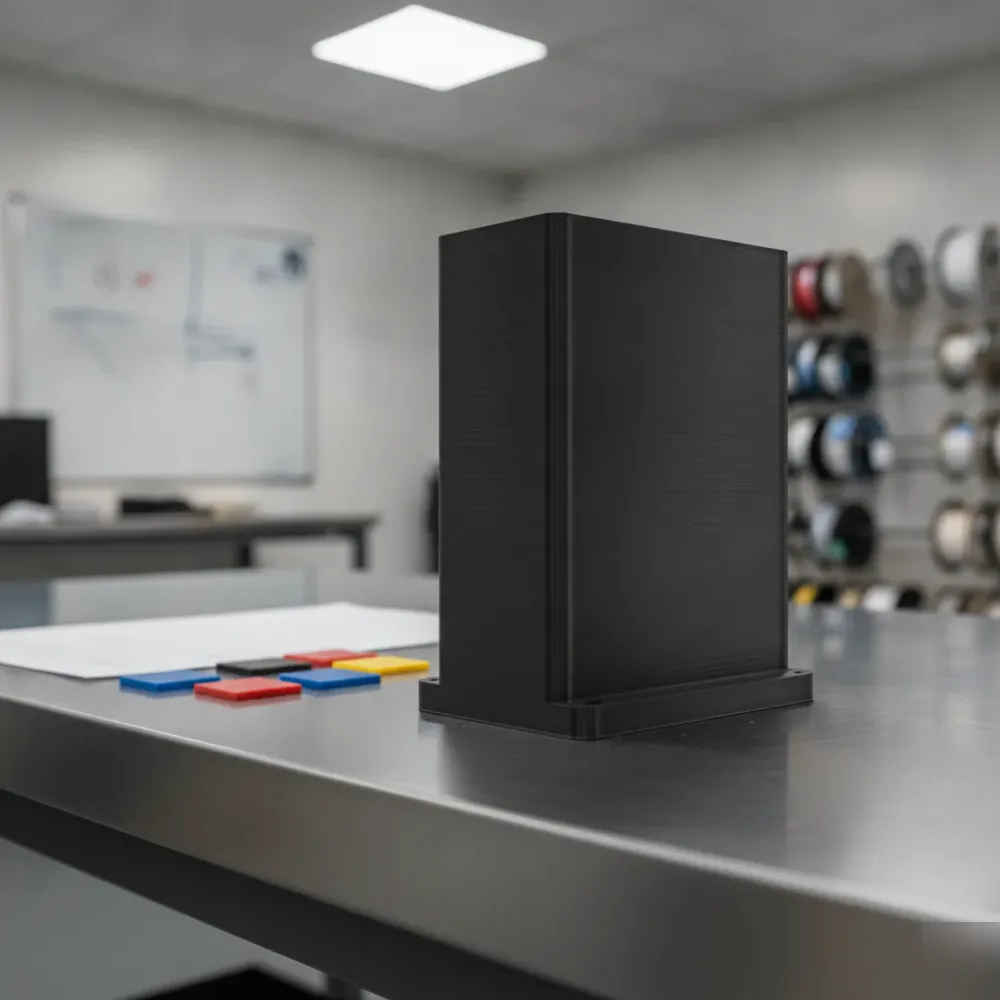
Our licensed engineers weigh each part against its duty cycle before we settle on a print material. That review covers continuous temperature range, exposure to hydrocarbons or produced water, UV degradation outdoors, and mechanical load, including the vibration that comes off rotating equipment like compressors and pump skids. This is the step where a printed part stops being a prototype and becomes something you can bolt onto a tank, skid, or aggregate handling trailer and trust.
- Chemical resistance to hydrocarbons, glycols, and produced water for battery and tank-adjacent components
- Temperature stability across Calgary’s operating swing, from summer heat to deep winter cold on outdoor lease sites
- Impact and fatigue resistance for parts mounted near compressors or gen-sets with sustained vibration
- UV and weathering resistance for anything installed outside an enclosure
- Dimensional stability so the finished part matches the STEP or STL model used for design validation
We document the material selection right alongside the stamped drawing package, so procurement walks away with a clear engineering record instead of a guess. That record backs up accurate cost estimates and cuts down on rework the next time this same part comes up for order.
Not sure what your End-Use Production Parts Printing project needs? Ask us.
Call now. Masters-3D is ready to help.
Engineering Validation and Stamping Before a Part Goes Into Service
End-use production parts printing in Calgary only matters once the part is bolted, welded, or fitted into a system that’s actually running. That’s where our in-house licensed engineers step in. Every geometry we print for production use, not just for a prototype, goes through a design review before the file ever reaches the printer.
We check load path, wall thickness, and fit tolerance against the original CAD model, or against the point cloud data if the part was reverse engineered from a scan. For a compressor bracket or a pump skid fitting, that review isn’t a nice-to-have. It’s the difference between a part that fails in six months and one that doesn’t.
Our engineers move between STEP, IGES, and STL formats depending on where a part sits in the design chain, and we can hand off a stamped drawing package right alongside the physical print. That stamped sign-off carries the most weight on facility retrofits in Calgary’s industrial corridors, where equipment often has to meet internal engineering standards before it’s cleared to go on site.
- Design review against source CAD, STEP, or IGES geometry before printing
- Wall thickness and load path check specific to the part’s operating environment
- Fit validation against point cloud or as-built data where the part replaces an existing component
- Engineering stamping and sign-off available for parts entering regulated or safety-critical service
- Final part inspection against the validated drawing before it ships
We see this step skipped all the time by shops that only offer printing with no engineering behind it. That gap is exactly what our stamped, validated process is built to close.
When Prototyping Is Enough and Production Printing Isn’t
Not every part on your desk needs the full production treatment. If the design is still in motion, if the mounting holes might shift or the wall thickness is still under review, a rapid prototype is the right call. We run into this every week: a project manager wants a finished production part before the design itself has even settled down.
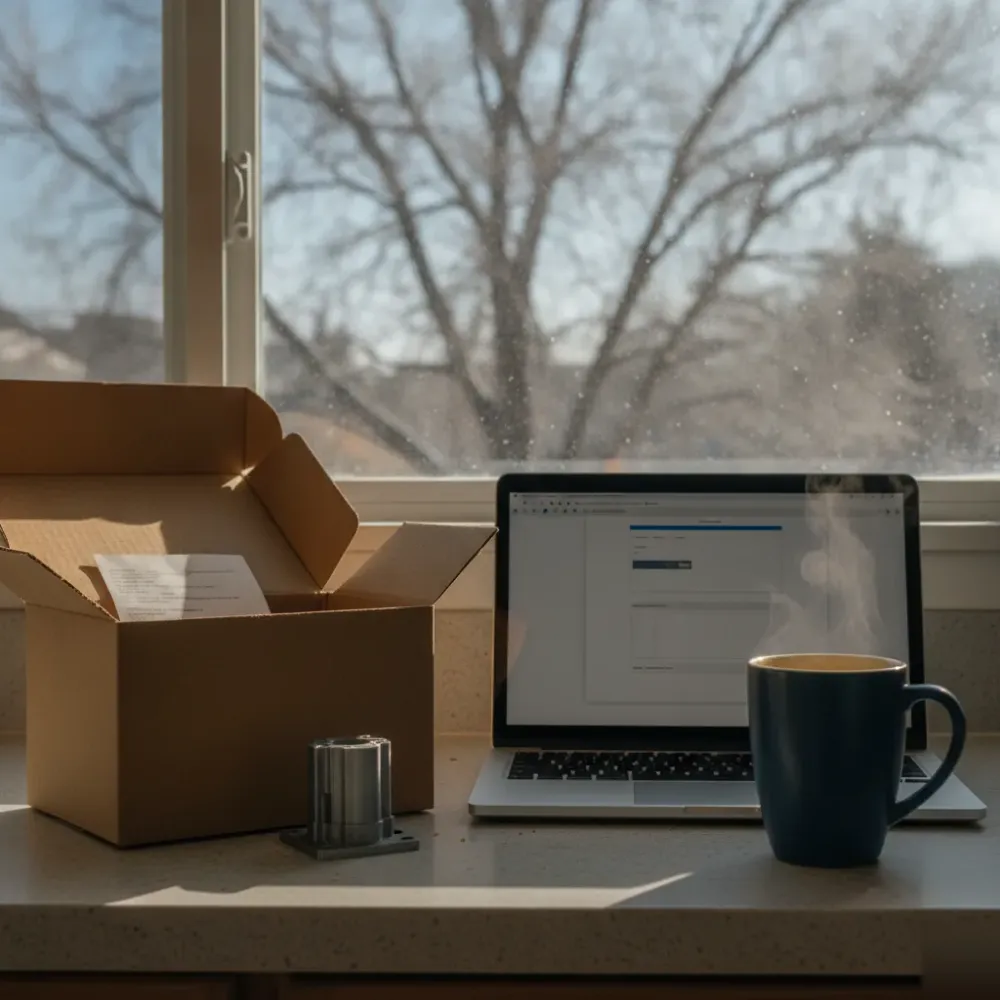
Prototyping answers the cheap questions: form, fit, and function. Production printing has to answer a much harder one. Can this part survive its actual service life in the field, under real load, real temperature, real chemical exposure? On a Calgary lease site in January, that part might be sitting at minus 30 C. A prototype resin isn’t going to tell you how it holds up there.
So how do you know which stage you’re actually at? Run through a few questions before you place the order.
- Has the geometry been signed off, or is it still in review
- Will this part carry structural load, pressure, or vibration in service
- Does it need to match final material properties, not just visual shape
- Is this going into a facility or lease site, or staying on a bench for testing
- Do you need a stamped, validated drawing behind the part, or just a visual check
If you answered yes to the last two, you’re past prototyping. That’s where our licensed engineers step in, validating the design and the material spec before anything goes to print. Order production printing too early on an unproven design, and all you’re really doing is paying to reprint it later.
Not sure which stage your part is at? That’s a fair question, and it’s worth answering before you spend a dollar on print time.
Frequently Asked Questions
Common questions about End-Use Production Parts Printing
What should I bring in when I need a part reverse engineered or reprinted?
Bring the worn or broken part itself, even if it looks rough. Our engineers use 3D laser scanning to capture its shape, so we don’t need a CAD file or drawing. If you have any old paperwork, a part number, or photos of it installed on the equipment, that helps too. Once we scan it, we build a solid CAD model and check tolerances before anything goes near a printer. You walk away knowing the part was measured, not guessed at.
How long does it take to get a production part after the engineering review?
Timelines depend on how complex the geometry is and how much scanning or reverse engineering the part needs. A simple bracket with existing CAD data moves faster than a legacy impeller pulled off an old pump skid with no drawing at all. What takes real time is the engineering review itself, checking load path, material fit, and duty cycle before the file is cleared. That review is what keeps a printed part from failing on a compressor package six months down the road.
Does Calgary’s winter weather change which material you pick for outdoor parts?
Yes, temperature swing is one of the first things our engineers check before picking a print material. A bracket sitting on a lease site outside Calgary has to handle deep winter cold and summer heat without cracking or warping. We test material choice against that full range, not just room temperature. Parts near compressors or gen-sets also deal with vibration on top of the cold, so we factor that in before we settle on a final material spec.
Can you make a replacement part if the original manufacturer is gone and there’s no CAD file?
Yes, this is one of the most common jobs we see, especially on older oil and gas equipment across Alberta. We scan the worn part, convert that scan into a CAD model, and have our licensed engineers validate fit and material before printing. This matters most when the original manufacturer is out of business and a replacement could take months to source. You end up with a stamped, engineered drawing instead of a rough copy of the old part.
How do you decide if a part is ready for production printing or still just a prototype?
We look at load, environment, and duty cycle before calling a part production-ready. A prototype only needs to confirm a design fits and moves correctly on a bench. A production part has to survive months or years of real use, whether that’s vibration on a gen-set enclosure or chemical exposure near a tank battery. If a part can’t hold up under the torque or pressure it will face, it goes back for redesign instead of straight to the printer.
Recent Comments